This, the 1911 New Zealand Coat of Arms, was on the wall of the Matakohe Post & Telegraph Office, a heritage building located next to the Kauri Museum. The Coat of Arms was upgraded in 1956 by the addition of a large image of the British Crown above the crest.
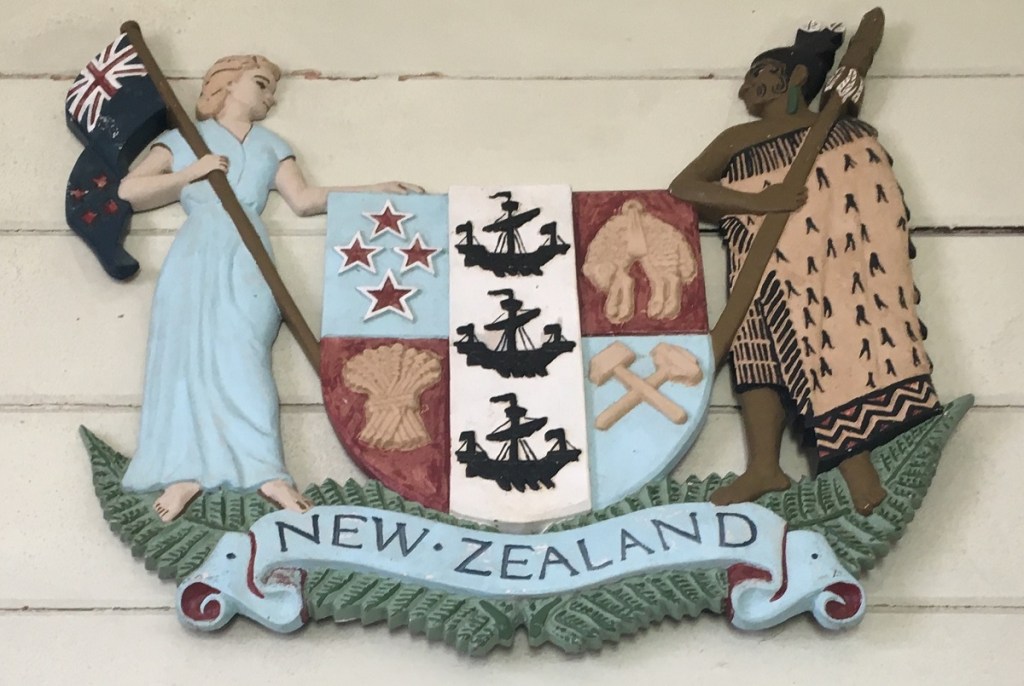
This earlier version of Coat of Arms reflects the bi-cultural nature of New Zealand while the later version moves the focus to New Zealanders as subjects of the Crown. This points out a dichotomy that we as Canadians share with New Zealand.
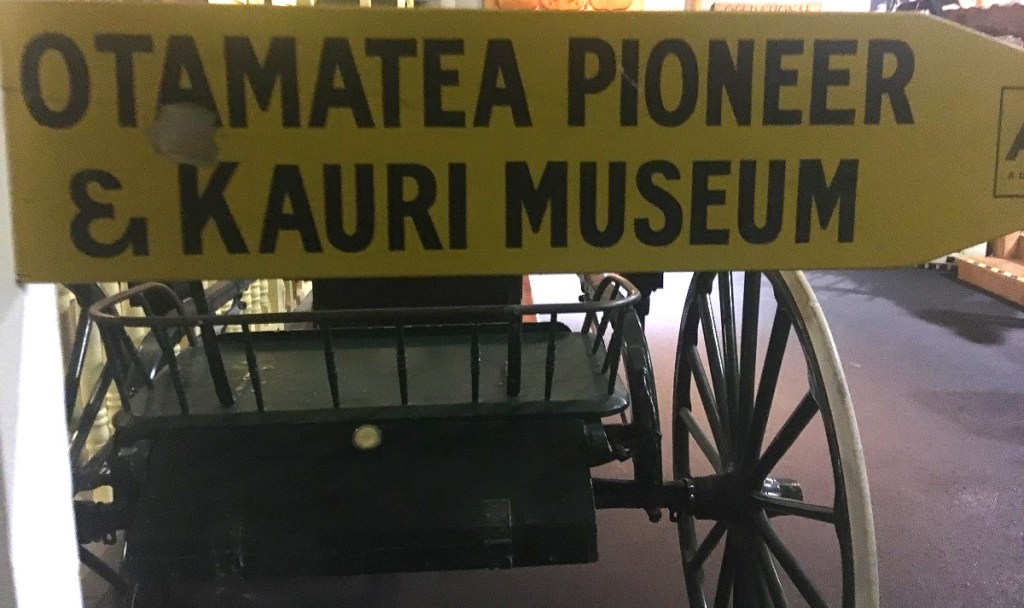
The Kauri Museum is a modest looking building from the street with an approximately 30m (100 ft.) frontage, but it is a collection of buildings joined together to provide 4,500 square metres (1.1 acres) of display area.
It has myriads of displays. We will show a sample of those here.
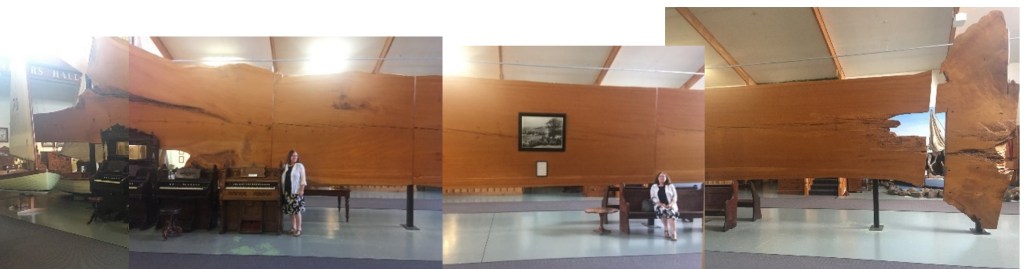
One display stood out above all others; a plank cut from one kauri tree. The Balderston Kauri was the one tree left on what became a farm owned by a family named Balderston. Viewing this example of a kauri tree, keep in mind that while impressive, this tree was much smaller than many of the trees harvested from the kauri forests.
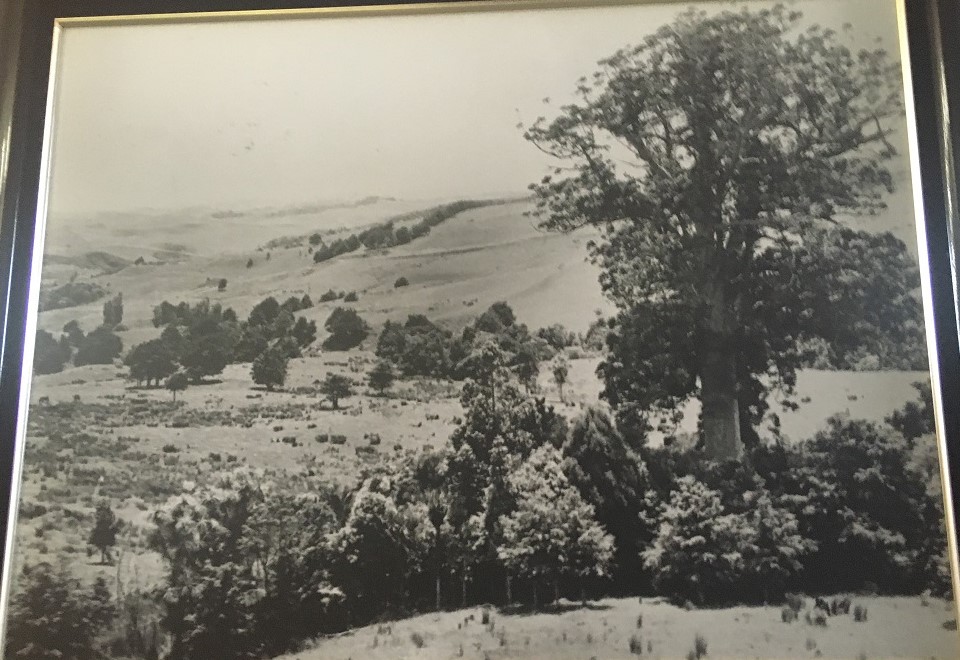
This photo shows the living Balderston Kauri and was taken in 1958. This tree was struck by lightning in 1987 and was dying when harvested in 1991.
The photo below shows the base section and the lowest trunk section.
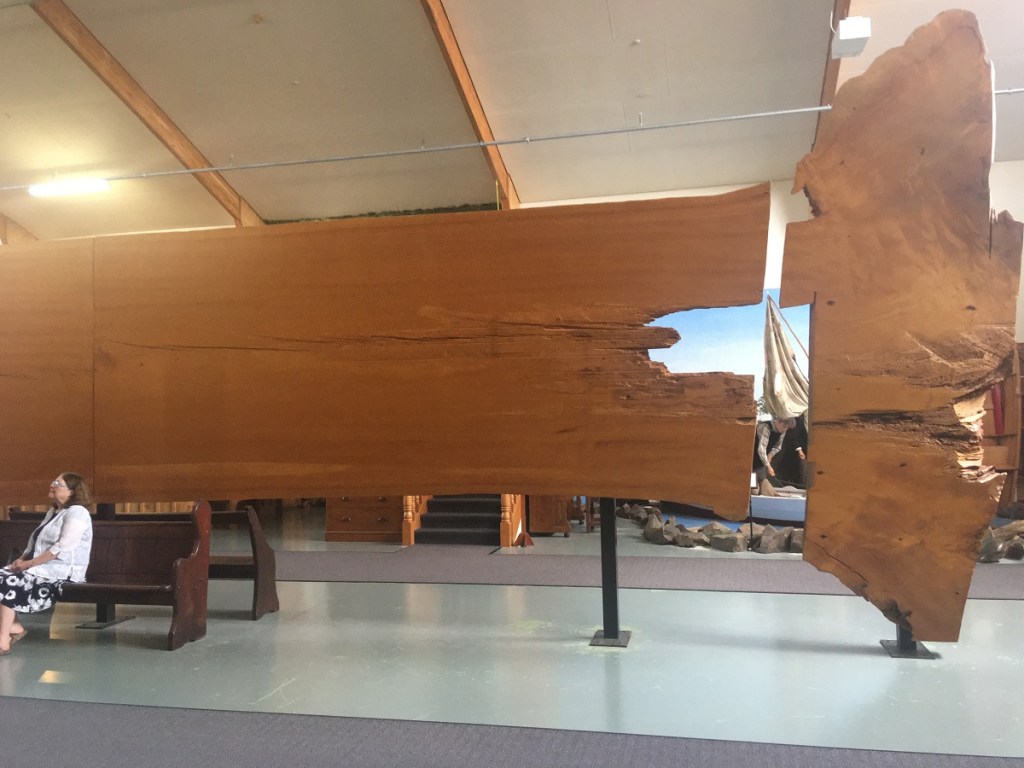
This montage assembles photos of the length of the display, and my identical twin wives LOL!
The museum also includes examples of items made from kauri wood, the history of development of the area and examples of machinery and equipment used in the kauri forest industry.
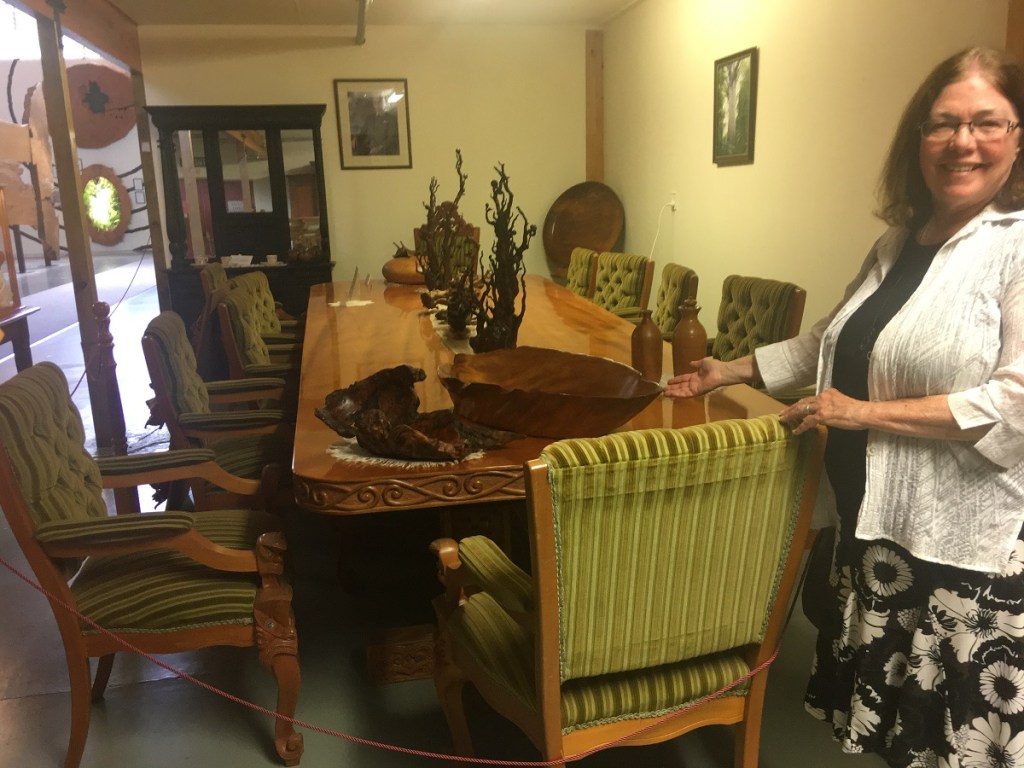
This boardroom table top was made from a single piece of kauri wood.

This lectern completes the boardroom set. Together these pieces show the esteem in which kauri wood was held.
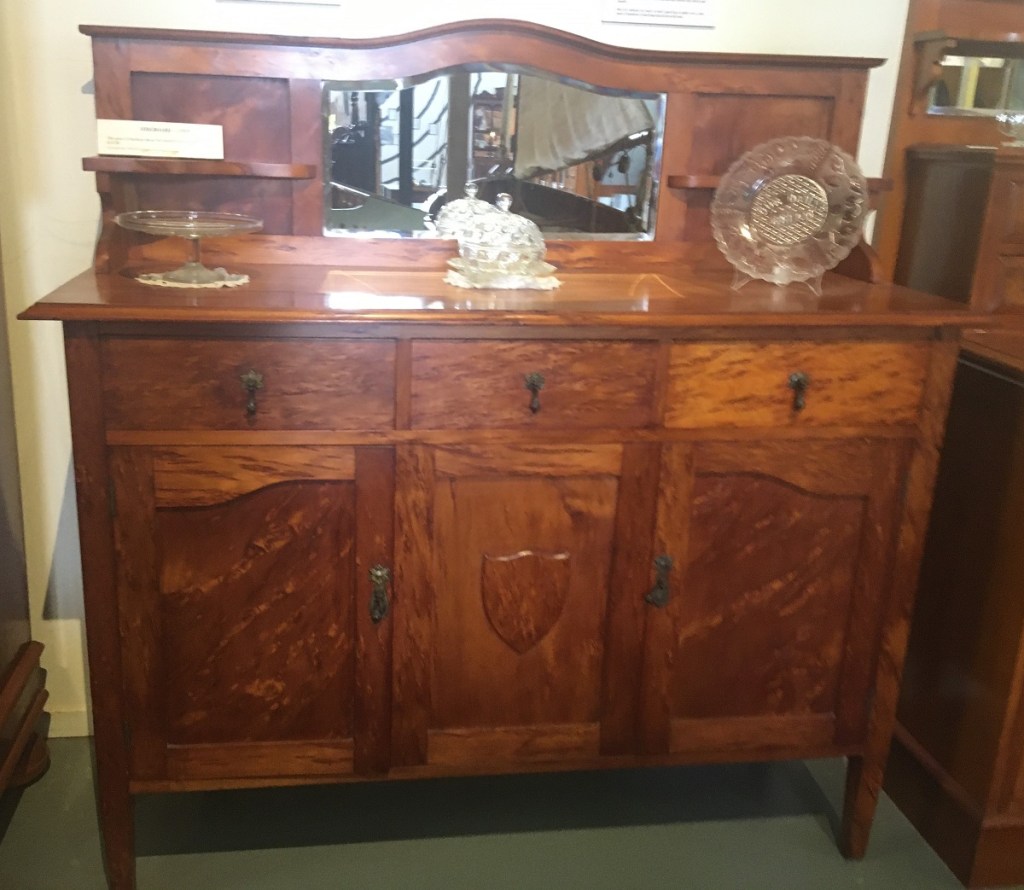
Wood from the clear trunks of the trees generally have straight clear grains. Wood cut from the bases and upper parts of the trees where the branches emerged had intricate grain patterns. This buffet is one of many examples of the beautiful grains on display.

This was one of many boats made from kauri wood. The straight grain of the main trunk wood was very well suited to boat building.

Transportation in the early days was mainly on horseback or by boat. Boarding houses were hubs in rural logging villages and communities.

They provided centres for social interaction and rooming for forestry workers and travelling business people. This full-sized boarding house within the museum made an impressive display.
This display was officially opened by NZ Prime Minister Helen Clark in 2006.
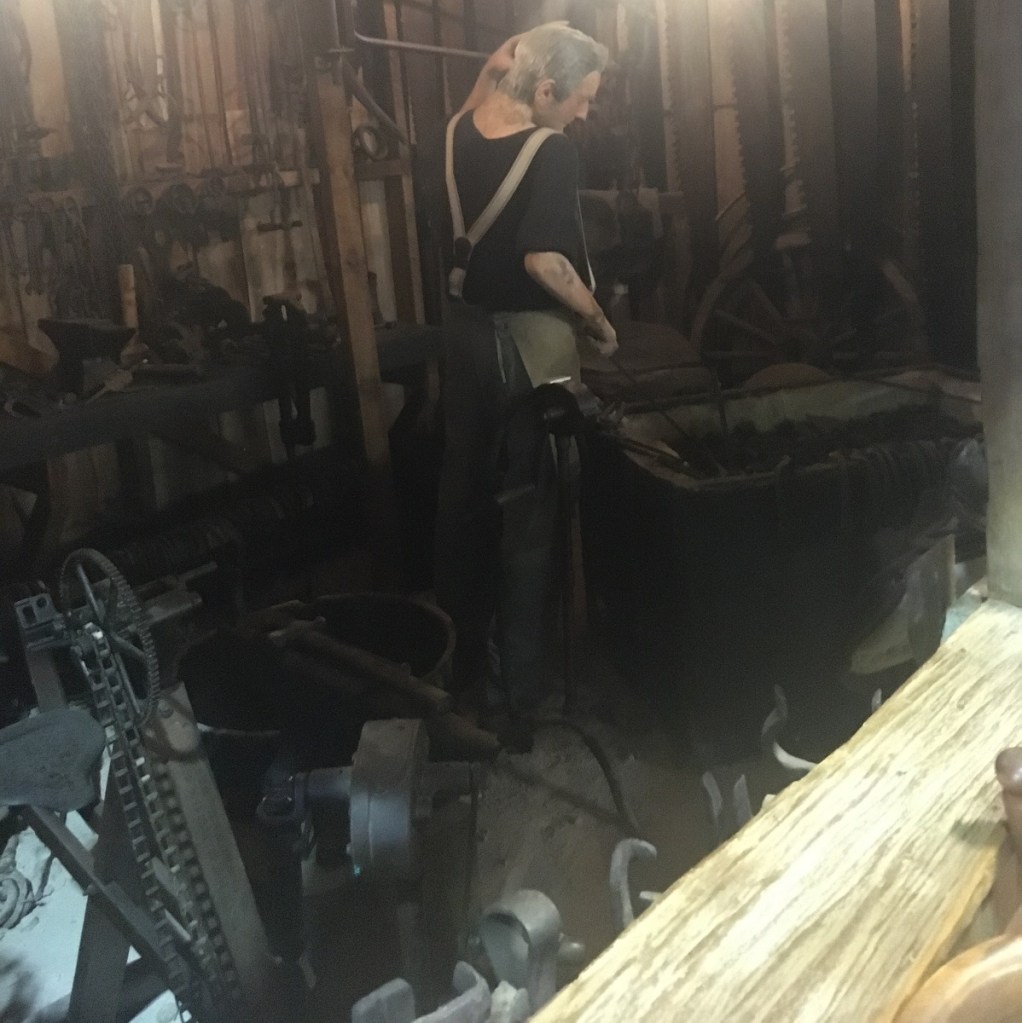
The Smithy, or logging camp blacksmith shop, serviced machinery, bullock and horse gear, wire ropes and chains, made horseshoes and shoed horses.
When changing locations, the essential buildings, a cookhouse, bunkhouse, huts and a smithy were built. The old smithy would be abandoned, and the contents moved to the new one.
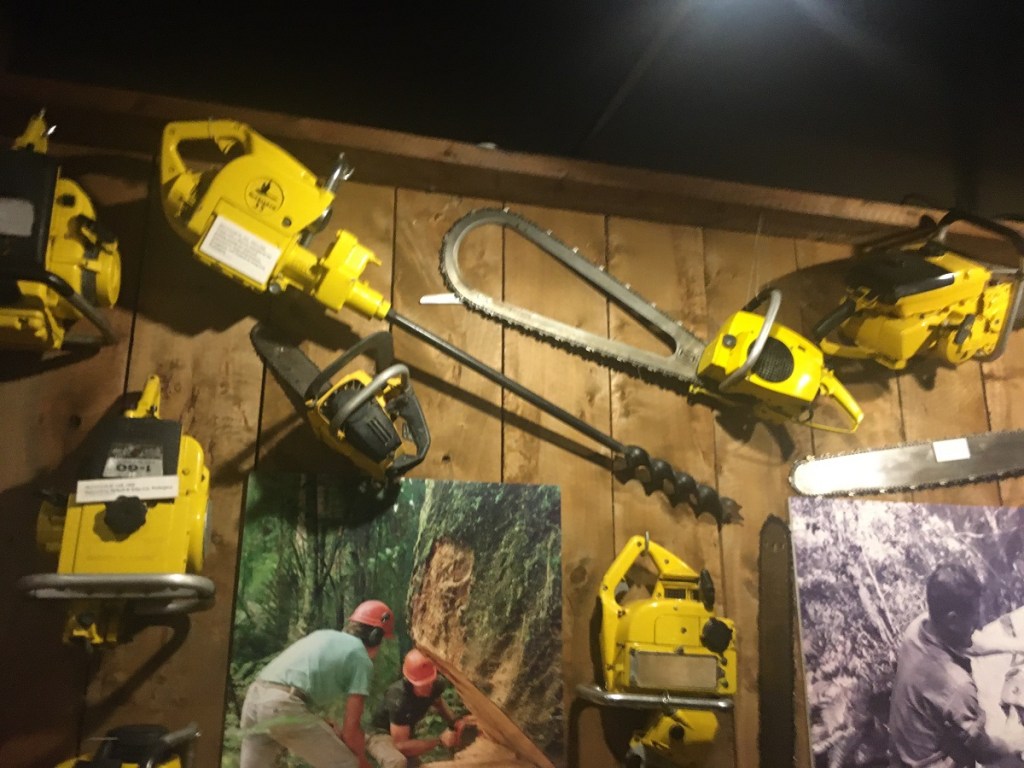
This photo shows less than 10% of a very large display of chain saws and other day-to-day gear used in logging.
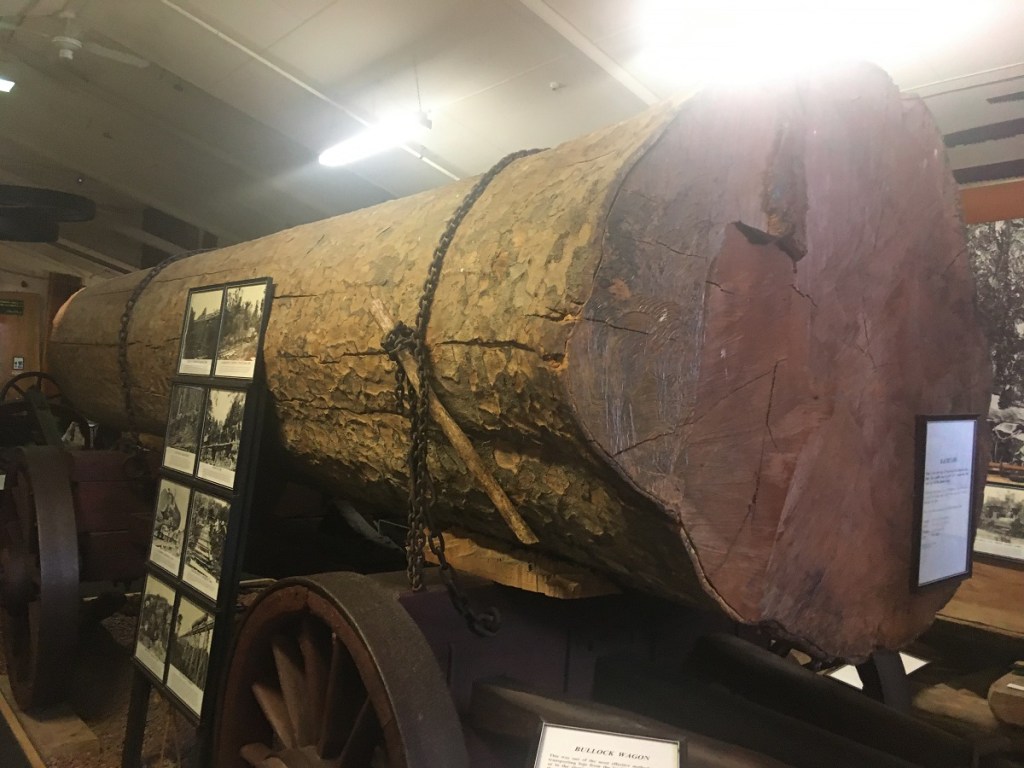
This shows a typical section of kauri log as it would have been hauled to the mill on a wagon.
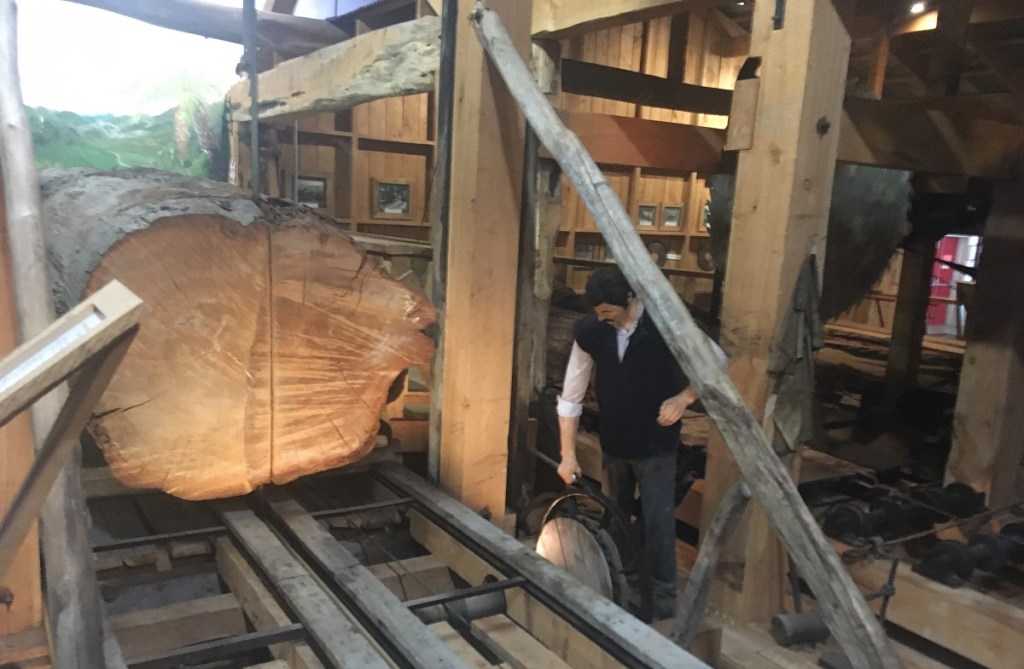
This “vertical breakdown saw” gives an example of the size of equipment required to mill these large logs.
The individual depicted in this display is Marek Weber, the third generation of Weber men to operate this particular saw.
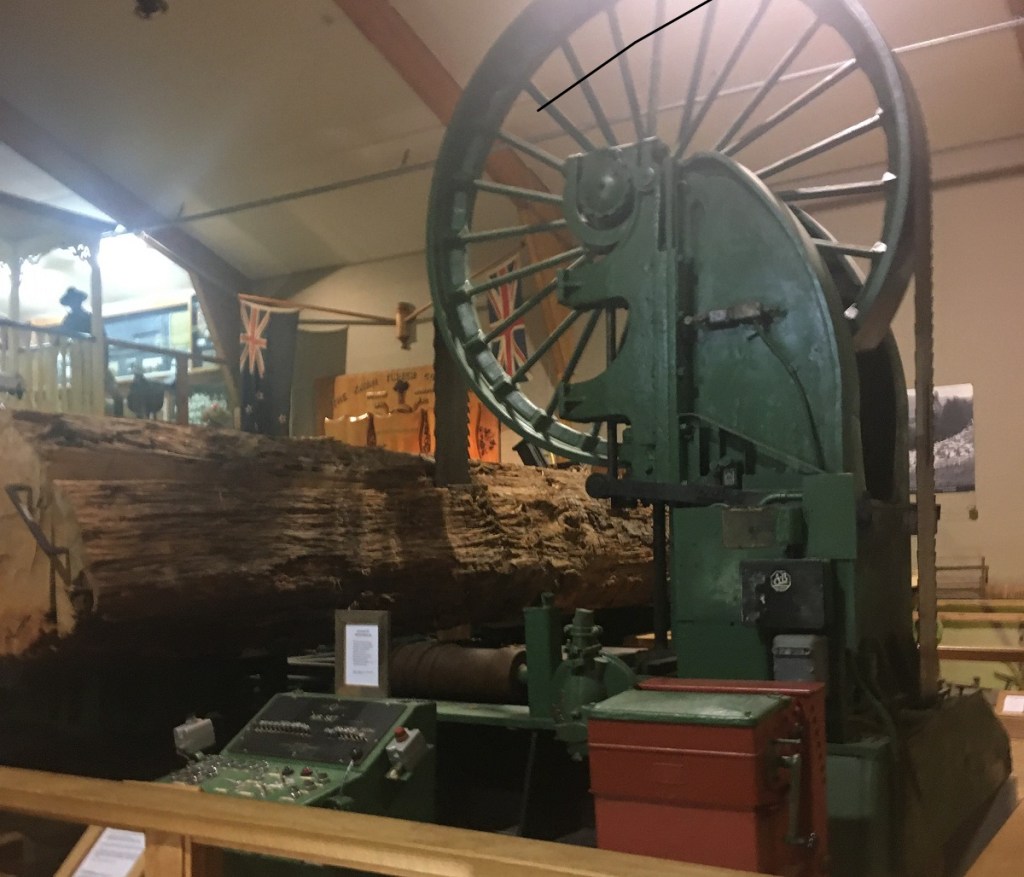
This is an example of the monstrous band saws used in milling these large logs.
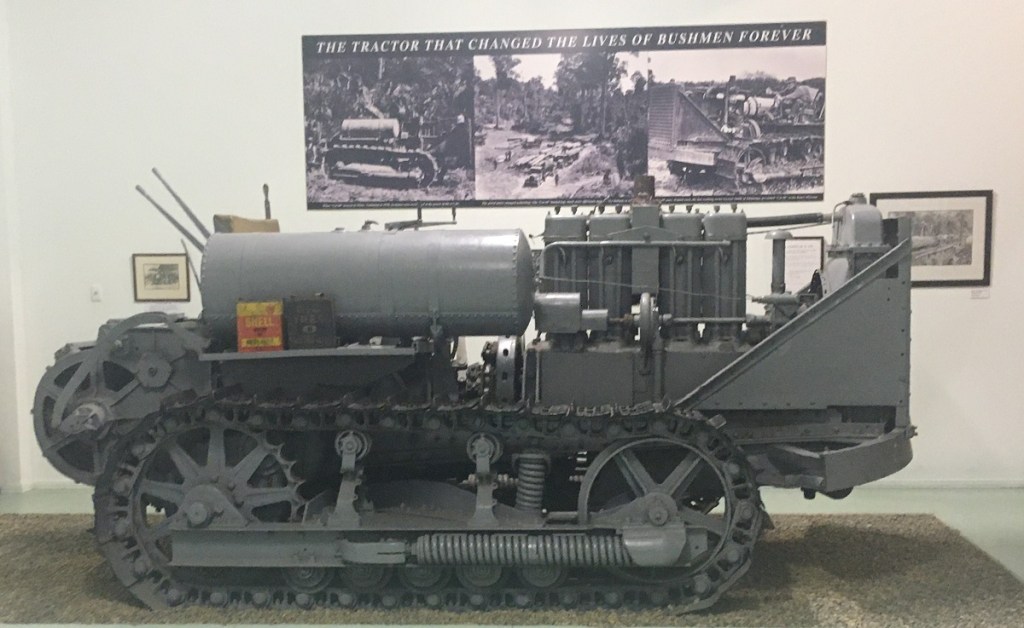
This 1929 Caterpillar 60 took the place of 8 bullock teams (112 animals), substantially modernizing logging operations.
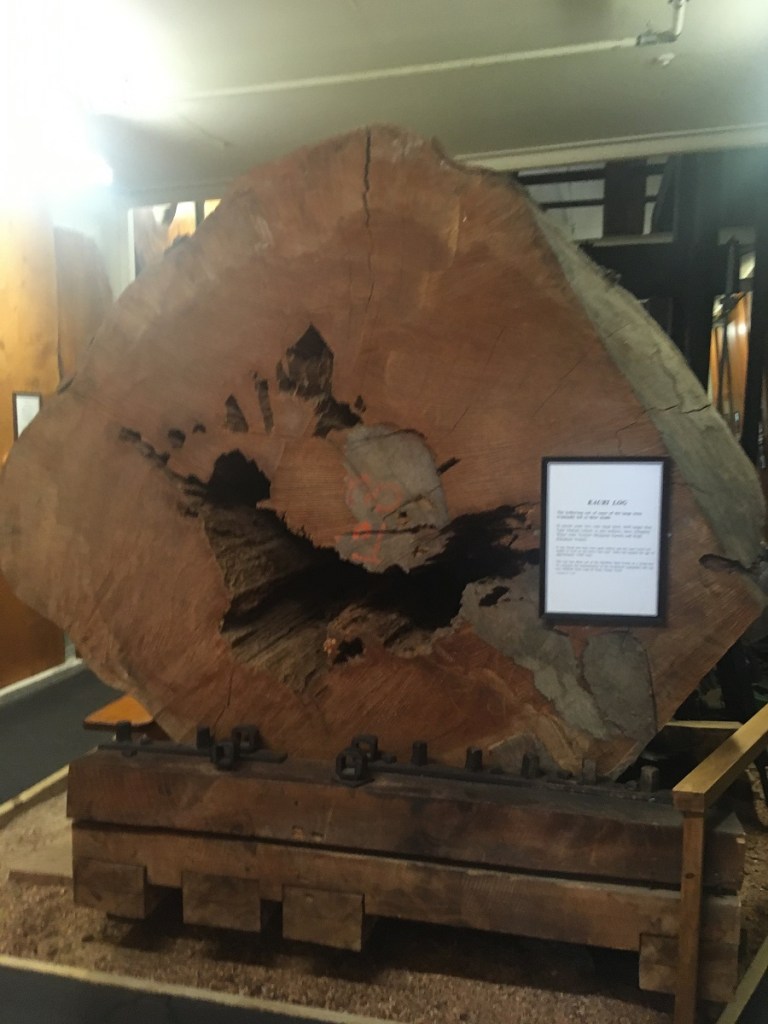
This section is from the base of a kauri log showing hollowing that can occur in the base of these very old trees. Kauri trees in the 1500-2000 year old range can be sufficiently weakened by hollowing in the base that they collapse and die.

This is the Warawara Kauri plank. The tree this plank came from had a 26-foot diameter base and had collapsed of old age at least 100 years before it was milled. The plank was cut with a portable mill. Maori legend suggests the Warawara Kauri was the largest-ever kauri.
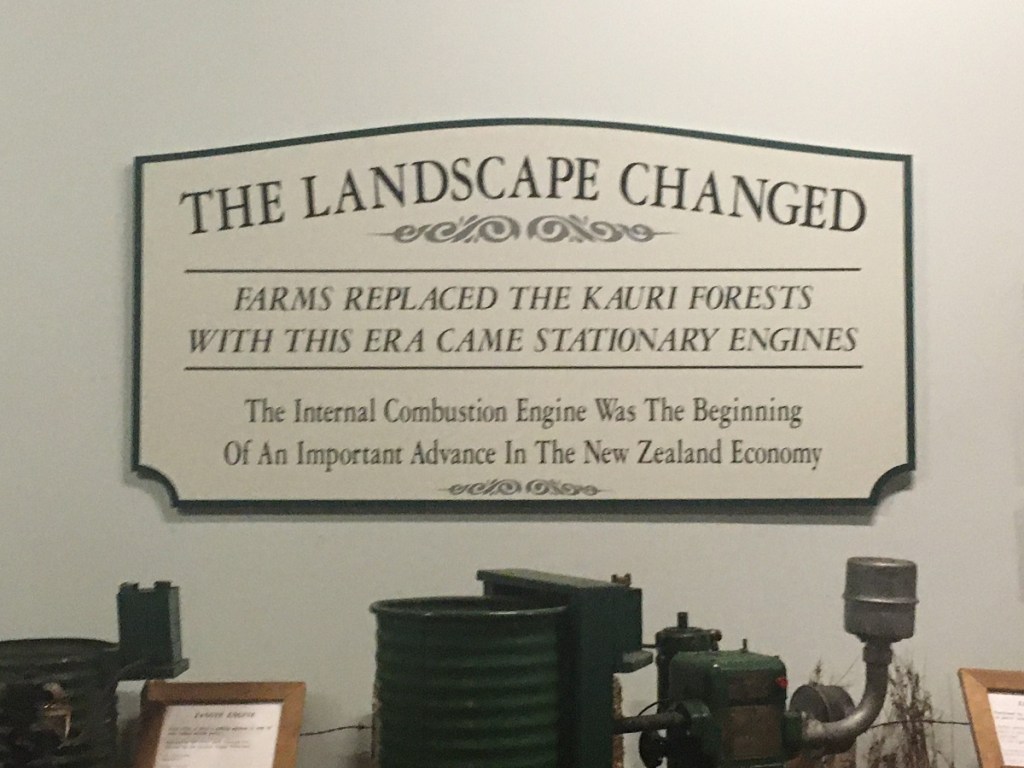
As the kauri forests were logged out, farming took over from forestry as the primary occupation.

Suppliers turned their attention to farming supplies as agricultural products became the main regional economy.
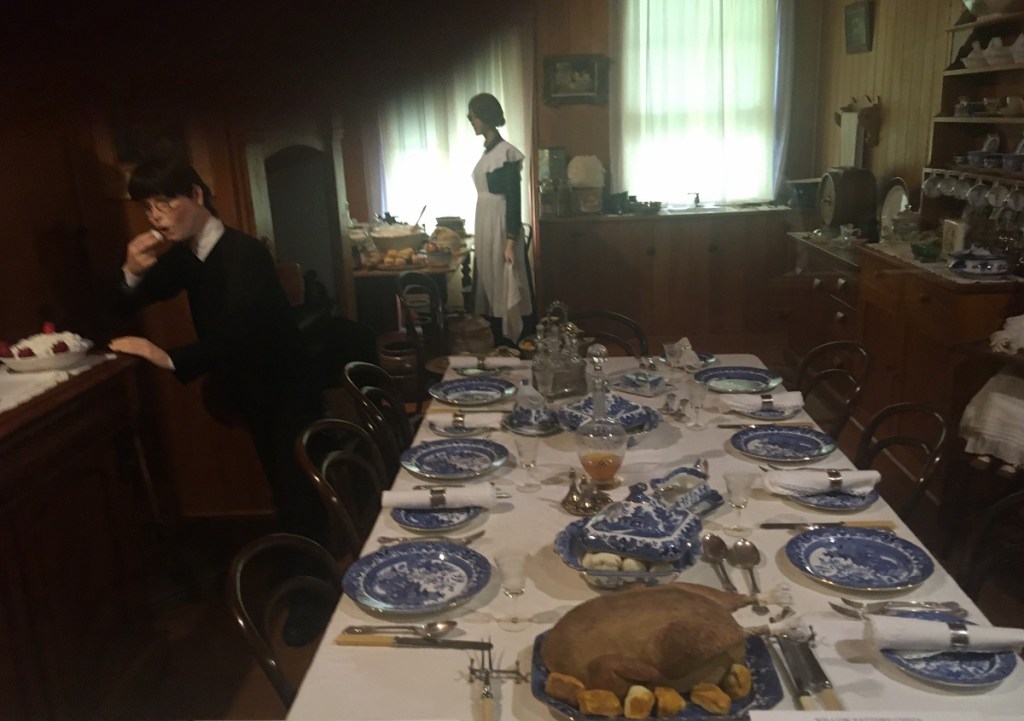
The museum also depicted life during the late 19th and early 20th centuries.
Note the kid nicking a strawberry from the cake as his mom looks away!
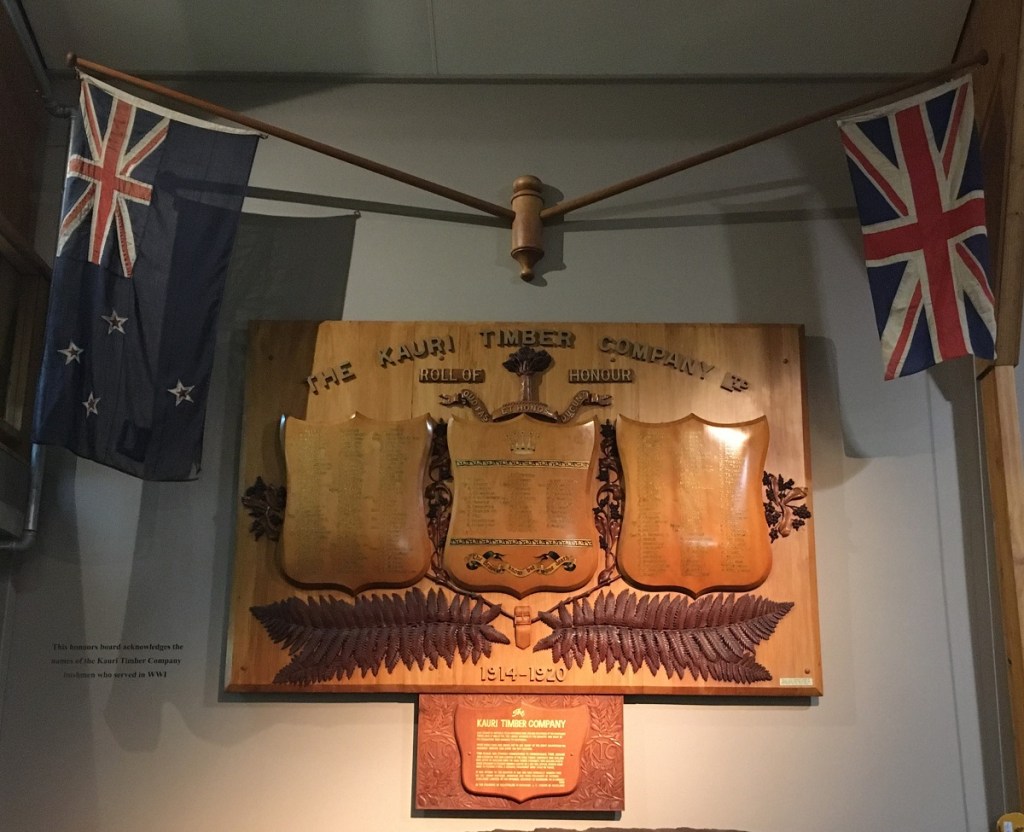
This Kauri Timber Company Roll of Honour lists employees who served in WW I, reflecting the strong British heritage of New Zealand.
The central plaque list the names of 35 employees killed in the war. The outer two plaques lists the names of 203 employees who served and survived. This is a memorial to the employees of one, albeit the largest, employer in a small remote community. It’s one of about 500 civic WW I memorials in NZ.
With this, we were off to the Waipoua Forest: Twilight Encounter – Maori Cultural Eco Night Tour.
 Grampafacts