Pohatu Penguins is a project initiated by Shireen and Francis Helps more than three decades ago within their working farm. They created the Pohatu conservation trust, Korora Kaitiakitanga, to maintain mainland New Zealand’s largest colony of these penguins. The Trust protects and enhances Pohatu’s unique fauna and flora while the Helps’ farm in balance with nature.
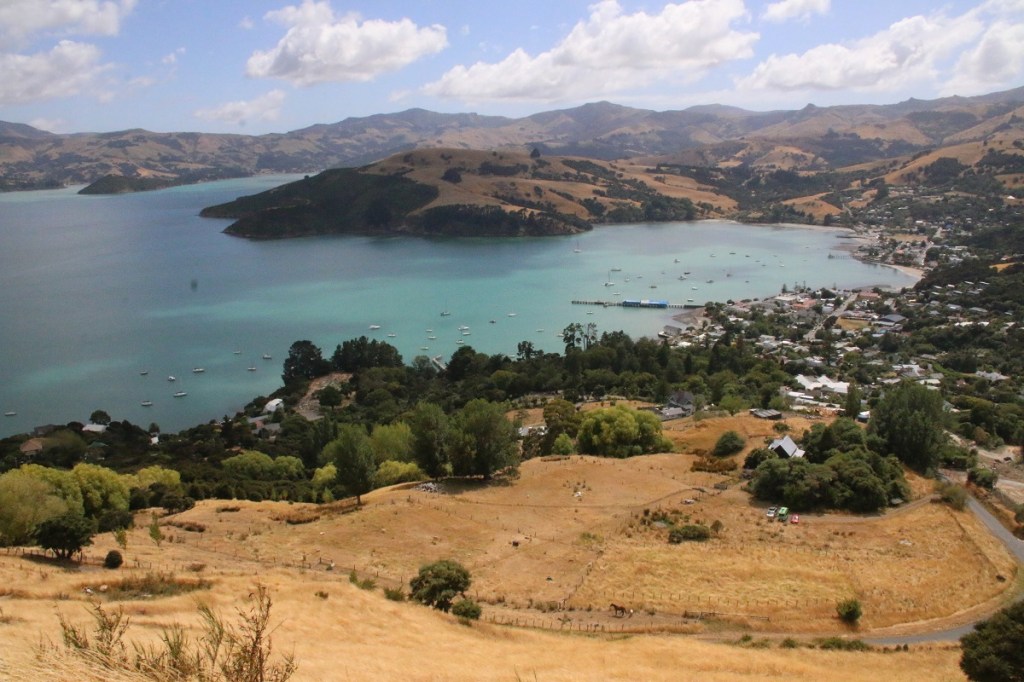
Our trip to Pohatu Penguins began with a climb of the hill behind Akaroa, yielding this stunning view back at the town. Note that the turquoise colour of the water is from glacial till or flour colouring the water. The darker areas of water are shadowed by clouds. If it was clear, the entire harbour would be uniformly turquoise.
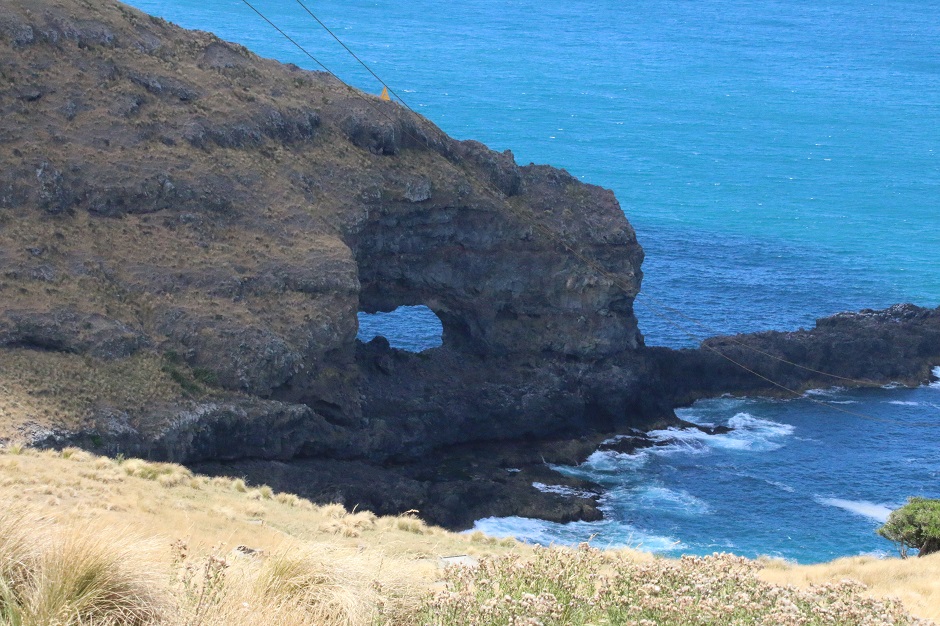
We were treated to many gorgeous views, including this one of Akaroa Head.
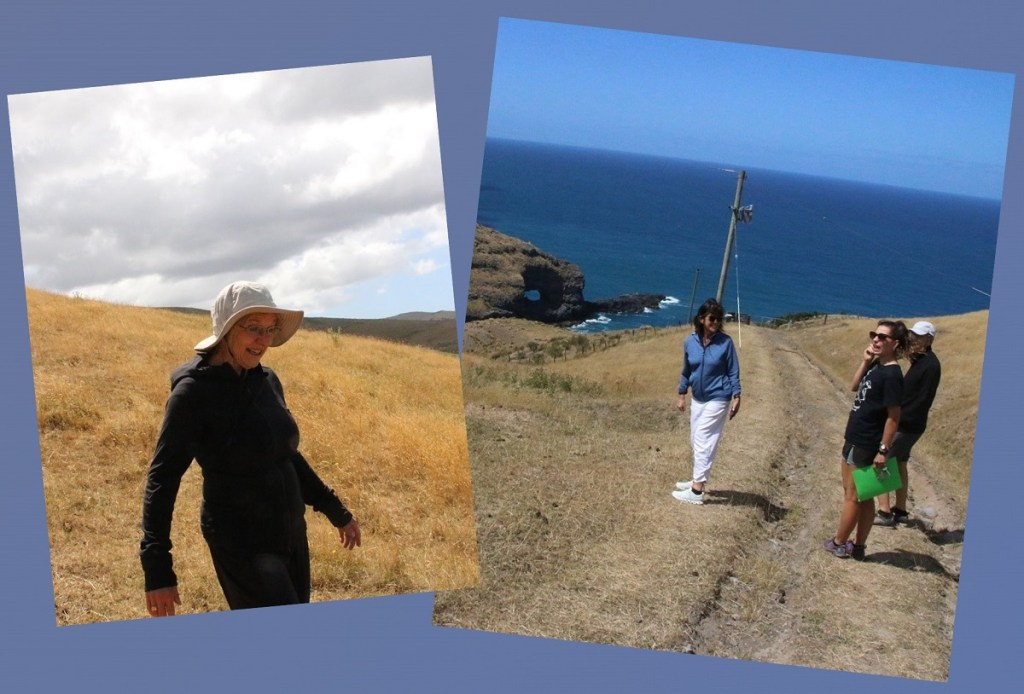
This gave us happy opportunities for hill walking, under the guidance of Eleanor our guide, with the green folder.
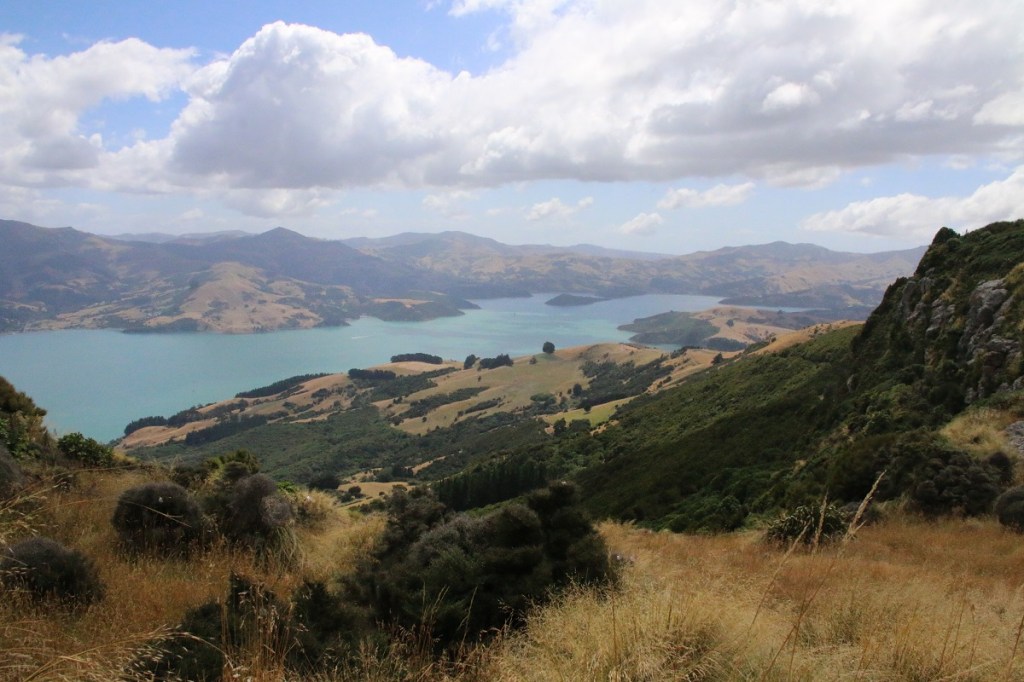
Akaroa in Maori means long harbour. This view gives a bit of an explanation why. Akaroa is on the small slip of water in the distance on the right.
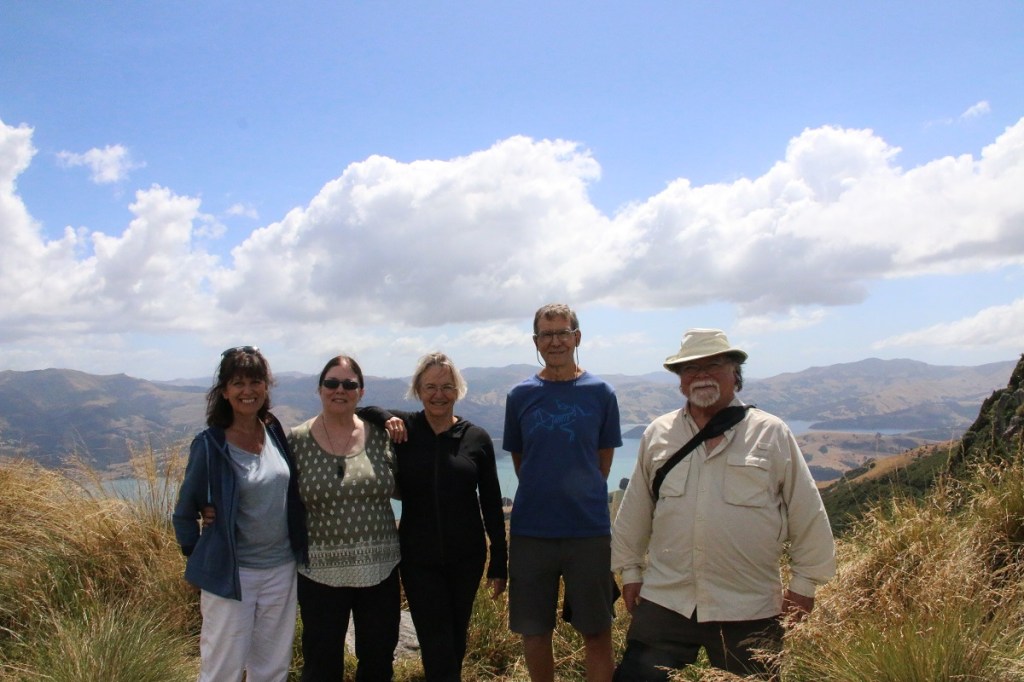
Here is our intrepid team, ready for the penguin adventure!
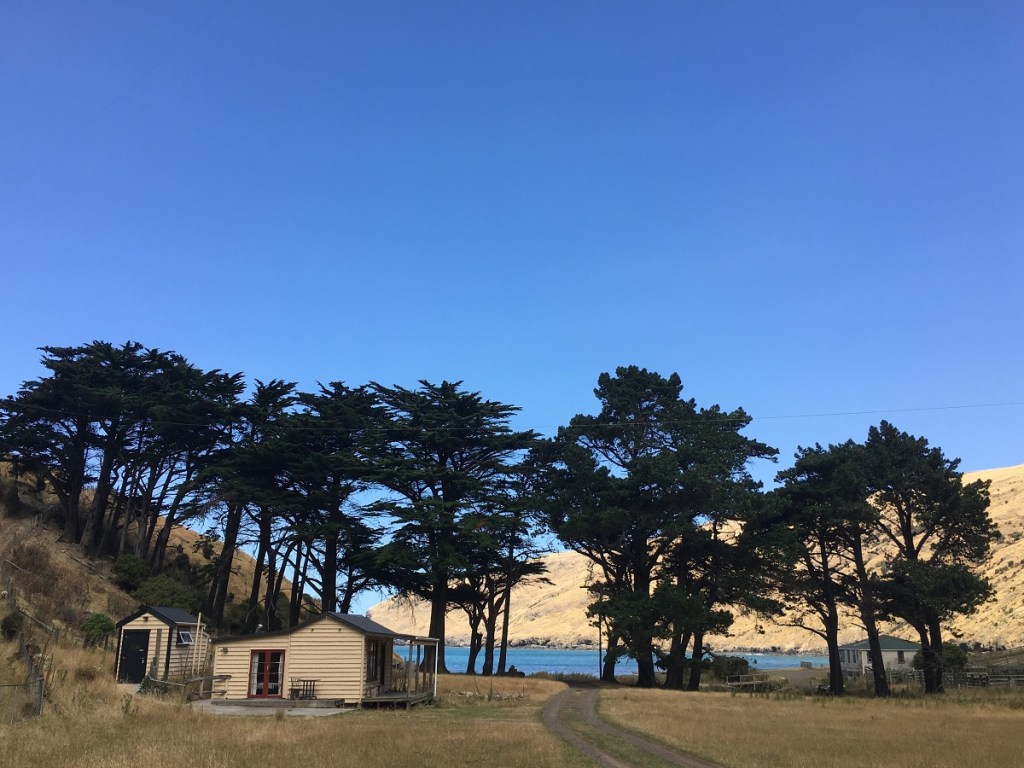
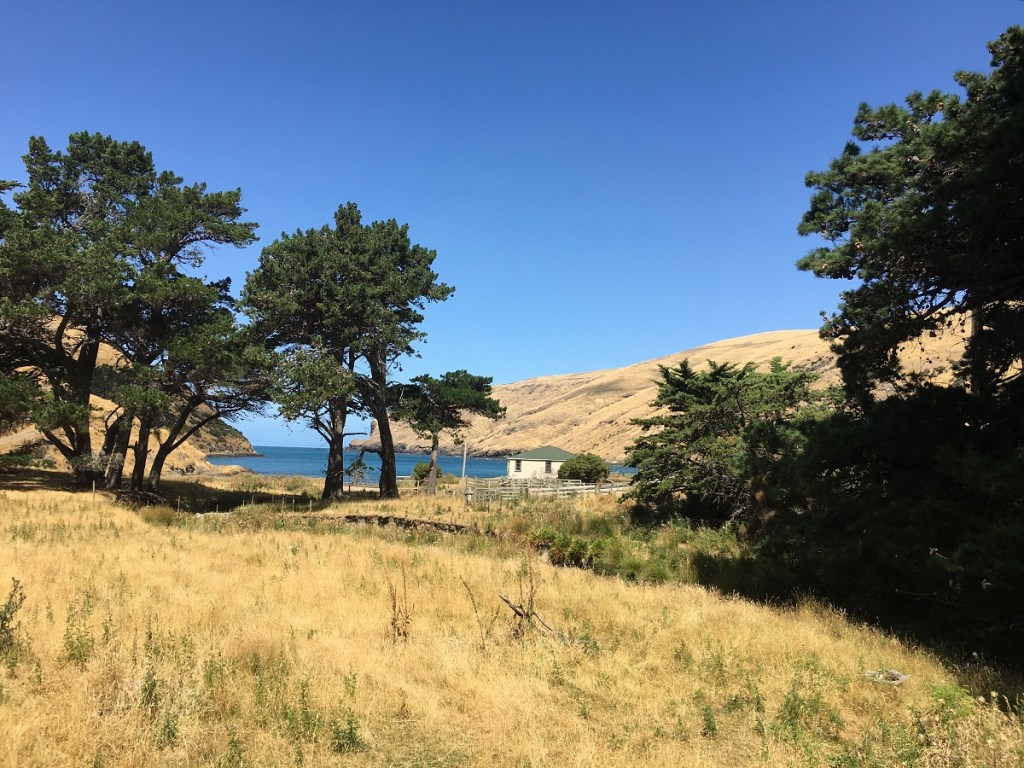
And we arrive. What a beautiful spot!
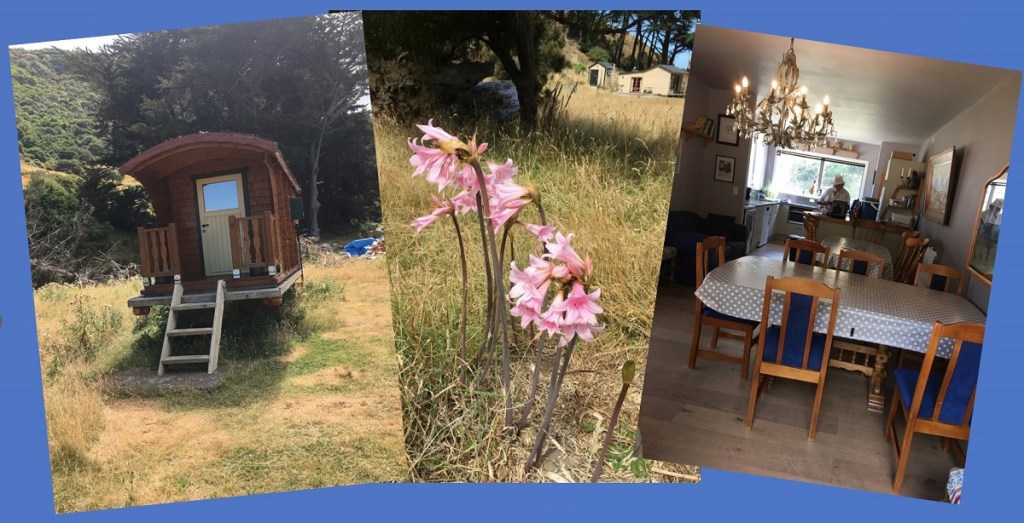
It’s a rustic and beautiful camp where you can stay and learn about their efforts and results. The Pohatu penguin colony was being decimated by introduced predators while also struggling to survive because of reduced productivity in the waters where they fish and feed.
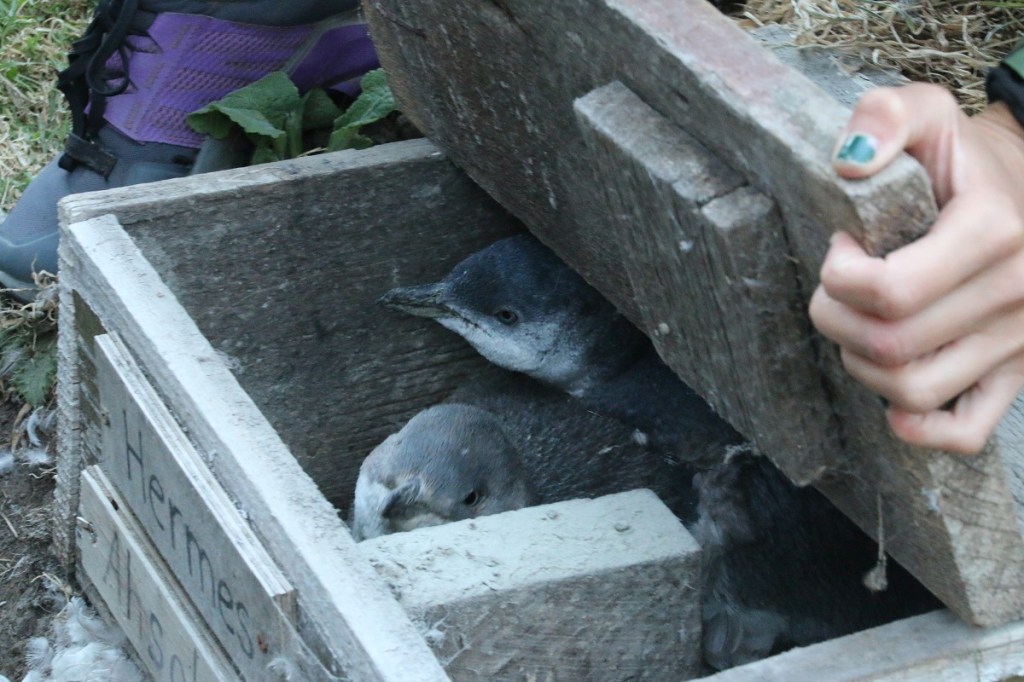
An integrated program of conservation was developed with terrestrial and marine main components. The terrestrial includes 1. development of constructed nesting habitats like the one shown here, 2. trapping programs to control predation by introduced species, 3. monitoring of nesting success and 4. intervention when nested offspring are at risk.
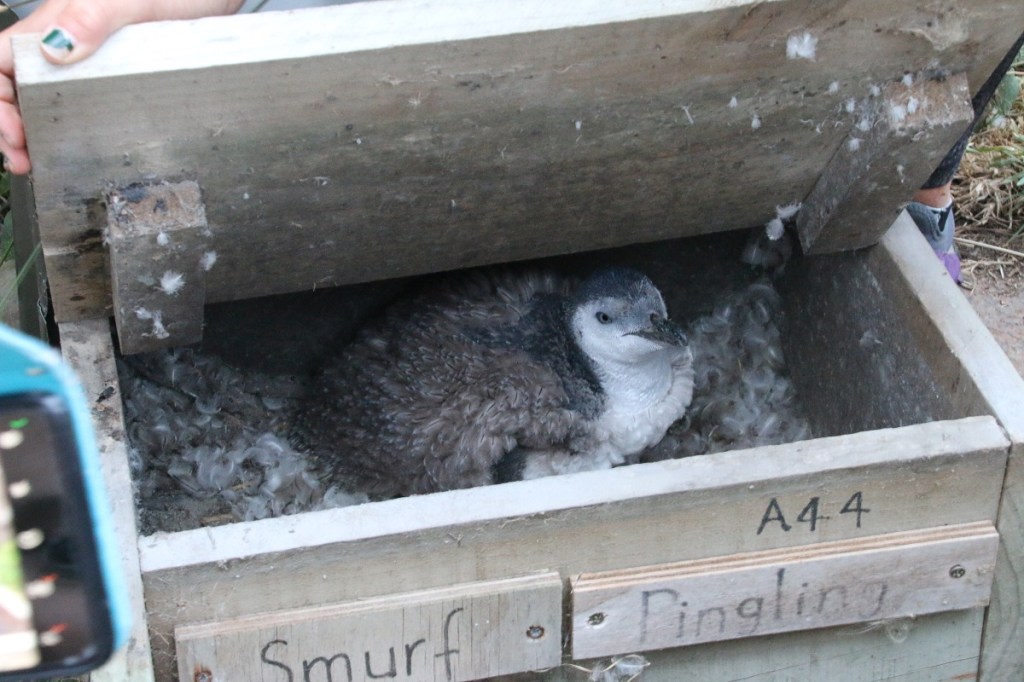
This intervention includes several components. Both parents raise the chick, taking turns roosting while the partner goes to sea to feed and return with feed for the chick. Because of reduced marine productivity, the parents were needing to go farther to sea and stay at sea for longer periods. The parent remaining on the nest’s food supply could become depleted, reducing the growth of the chick. Ultimately hunger could cause the remaining parent to abandon the nest in search of food. Each nest needs to be monitored daily to assure that the chicks are ready to fledge.
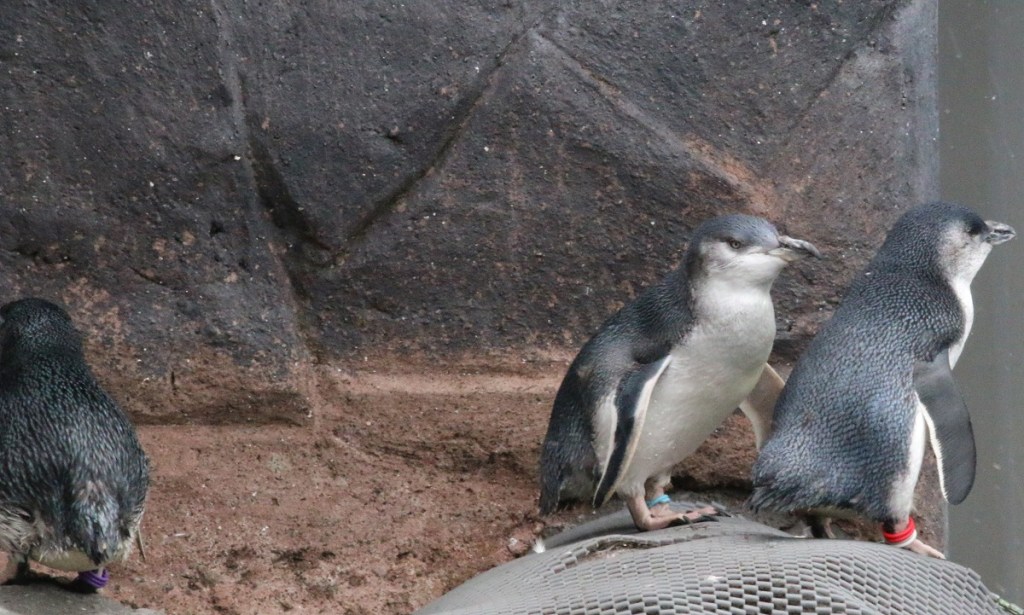
When chick viability in the nest is threatened intervention includes daily hand feeding of chicks from the nesting boxes to supplement parental feeding. Pohatu has partnered with the International Antarctic Centre (IAC) in Christchurch and if supplemental feeding at the nest boxes fails to achieve the required growth, chicks can be moved to the IAC like the ones shown here and reared there until they are large enough to survive in the wild.
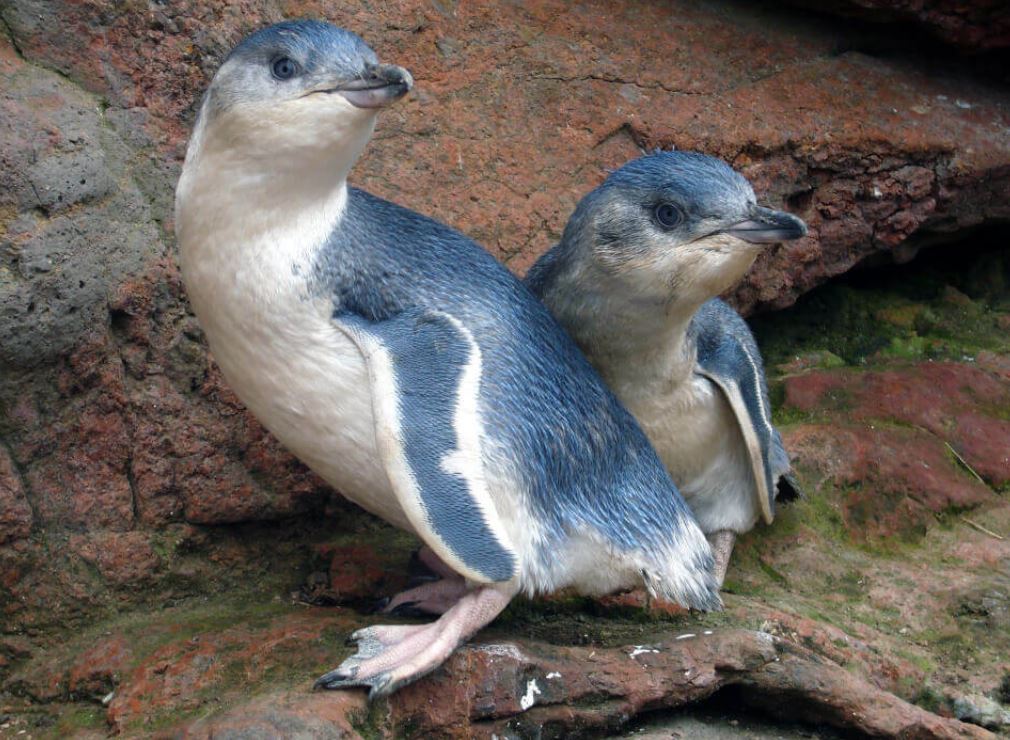
The marine component of the program focused on lobbying to reduce fishing pressure on penguin food sources. This was quite successful. New regulations created extensive no-fishing zones, and changes in fishing gear that banned the use of gillnets and set nets both within Akaroa harbour and extensive areas of adjacent open ocean waters.
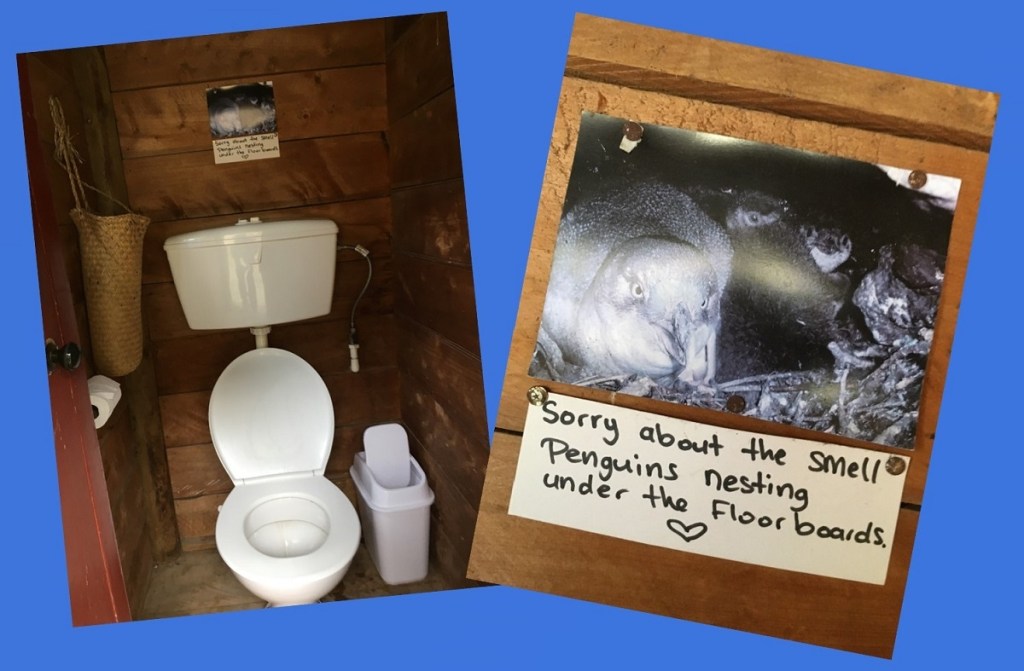
These programs have increased reproductive success to the point that the colony is growing. The success of this conservation effort is the result of the dedicated volunteer work of Shireen and Frances Helps, and the staff who deliver the programs at Pohatu Penguins.
The population is not yet sustainable without continued intervention, however, so this is a critical program within the broader New Zealand environmental context.
Hopefully this poster will come down someday!

The dedication and focus of Pohatu Penguin crews are reflected in the humour shown in these posters, hanging in the kitchen where we stayed.
After an afternoon and evening of seeing and hearing what these wonderful people do, we felt very privileged to know that our fees were contributing to the ongoing viability of this admirable project.
 Grampafacts