• Home
  • How to
  • About
    • Getting There
  • Our 2023 AdventureHeader for drop-down of travel locations
    • South Island
      • Christchurch Area / Banks Peninsula
        • Historic Christchurch
        • Quake City
        • City in Rebirth
        • City of Art
        • Akaroa
        • Pohatu Penguins
      • The West Coast
        • Pancake Rocks – Punakaiki
        • Paparoa Wildlife Trust Kiwi Release
        • To Haast and Beyond
        • On to Kingston
      • Milford Sound
      • Otago
        • Queenstown
        • Through Central Otago
        • Royal Albatross Centre
        • Dunedin
        • Orokonui Ecosanctuary
        • Oamaru
      • Back to Canterbury
        • Off to Aoraki / Mt Cook
        • The Clay Cliffs
        • Aoraki / Mt Cook
        • Driving in the Rain
        • Getting to Kaikoura
        • Kaikoura
        • On the Road Again
      • Omaka Aviation Heritage Centre
    • North Island
      • Wellington to Matamata
        • Wellington
        • On to Lake Taupo
        • Huka Falls
        • Te Puia
        • Mt Manganui to Matamata
      • Hobbiton
        • On to Matakohe
      • The Kauri Forest
        • The Kauri Museum
        • The Kauri Forest Walk
        • Omapere
      • The Bay of Islands
        • Waitangi Treaty Grounds
        • Russell
      • To Whangarei and Beyond
        • Hundertwasser Art Centre
      • Auckland
        • Auckland Sky Tower
        • Auckland War Memorial Museum
        • Auckland Viaduct Harbour
      • Homeward Bound
  • Natural History
  • Contact
  • Natural History

    New Zealand has unique natural history. It has been a distinct and separate land mass for 80 million years, since about 15 million years before the dinosaurs went extinct and the resulting terrestrial fauna was distinctly different from the rest of the planet. New Zealand had no terrestrial mammals except for seals and bats for several million years prior to human habitation. Its terrestrial fauna comprised mainly insects, lizards and birds.

    Many extraordinary birds flourished in New Zealand’s lush rainforests. The lack of mammalian predators enabled the birds to develop various degrees of flightlessness, ground feeding and nesting. These features developed concurrently with an absence of predator avoidance behaviours.

    The first Māoris are believed to have arrived circa 1300 C.E. and introduced mammalian predators. Subsequent waves of Māori migrants increased hunting pressure on large birds. European arrivals in the late 18th and into the 19th centuries brought additional mammalian predators putting more pressure on natural resources. Cumulatively, the impacts were devastating.

    Within a few hundred years of the first migrant arrivals, 40% of New Zealand’s terrestrial birds had been lost. A total of 58 species of birds had disappeared. A few key examples are highlighted here:

    The Moa
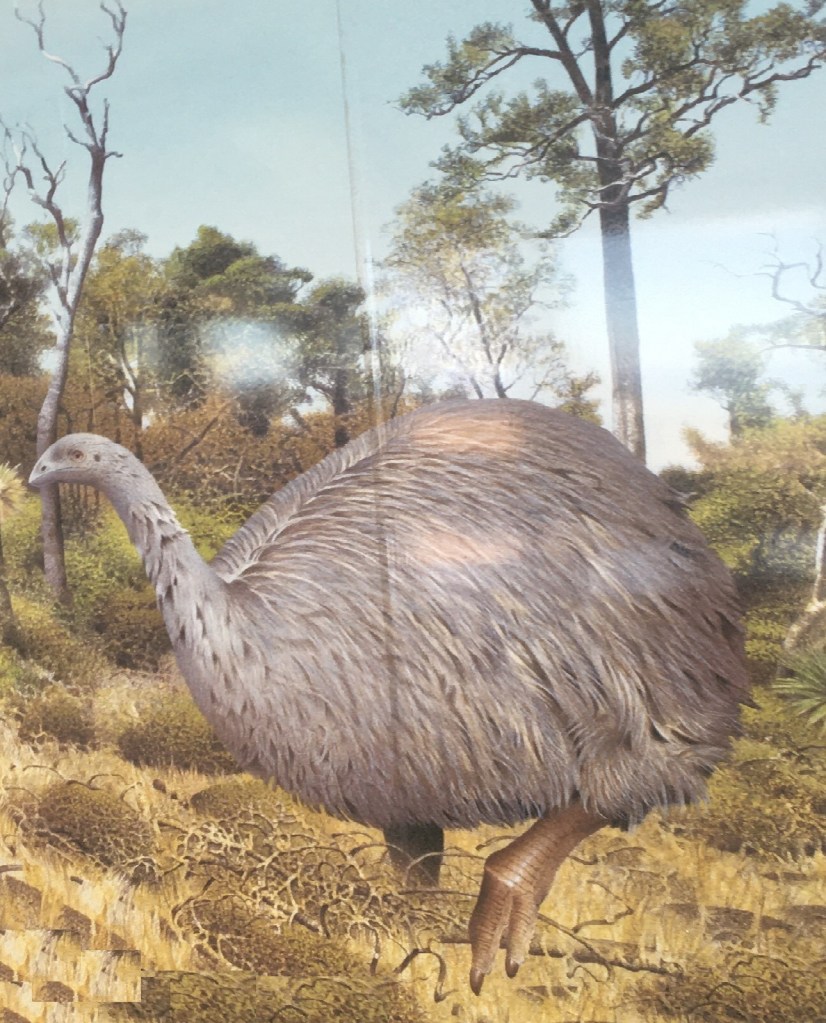
    The Moa was the tallest bird to ever live. The ten species of Moa were diverse with a wide range of habitats and sizes. The Little Bush Moa was the size of a turkey while the Giant Moa was the largest. The photo below shows Julius von Haast with a collection of Moa skeletons. If he was average height, those skeletons would stand about 3.5m.

    Moas were hunted to extinction within a hundred years of the arrival if the first migrants.

    Haast’s Eagle

    This was the world’s largest eagle with a wingspan of up to 3 metres and body masses up to 18 kg. They had huge feet with toes measuring over 6 cm and sharp claws extending another 3 cm.

    They were unique in their ability to take prey 10 to 20 times their body mass; the Moa. Examination of Moa remains suggest the eagles would attack from behind. They grabbed the Moas by their hips, took them to the ground and killed them by crushing their skulls with their powerful beaks.

    By comparison, the Bald Eagle has wingspans up to 2.3 m and weights up to 3.6 kg. They don’t characteristically take prey in excess of their own body mass. With 5 times the body mass, Haast’s Eagles were much more powerful birds.

    Haast’s Eagles died out with the extinction of the Moa.

    Laughing Owls
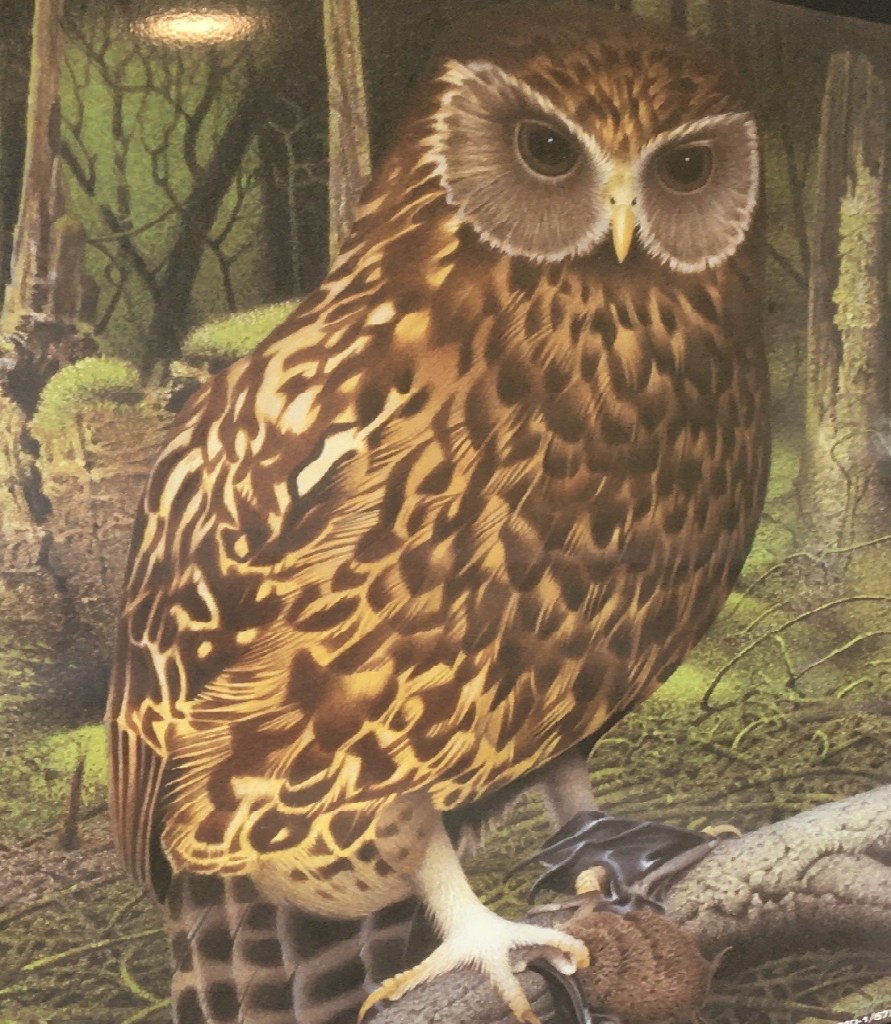
    This bird was given its name because it sounded like someone laughing. The Laughing Owl was twice as big as the remaining native owl – the Morepork. The owl had strong talons enabling it to kill tuatara, kiwi, ducks and even baby seals. This nocturnal bird of prey was found throughout New Zealand but went into decline in the mid-1800s. It was declared extinct in 1914.

    Huia
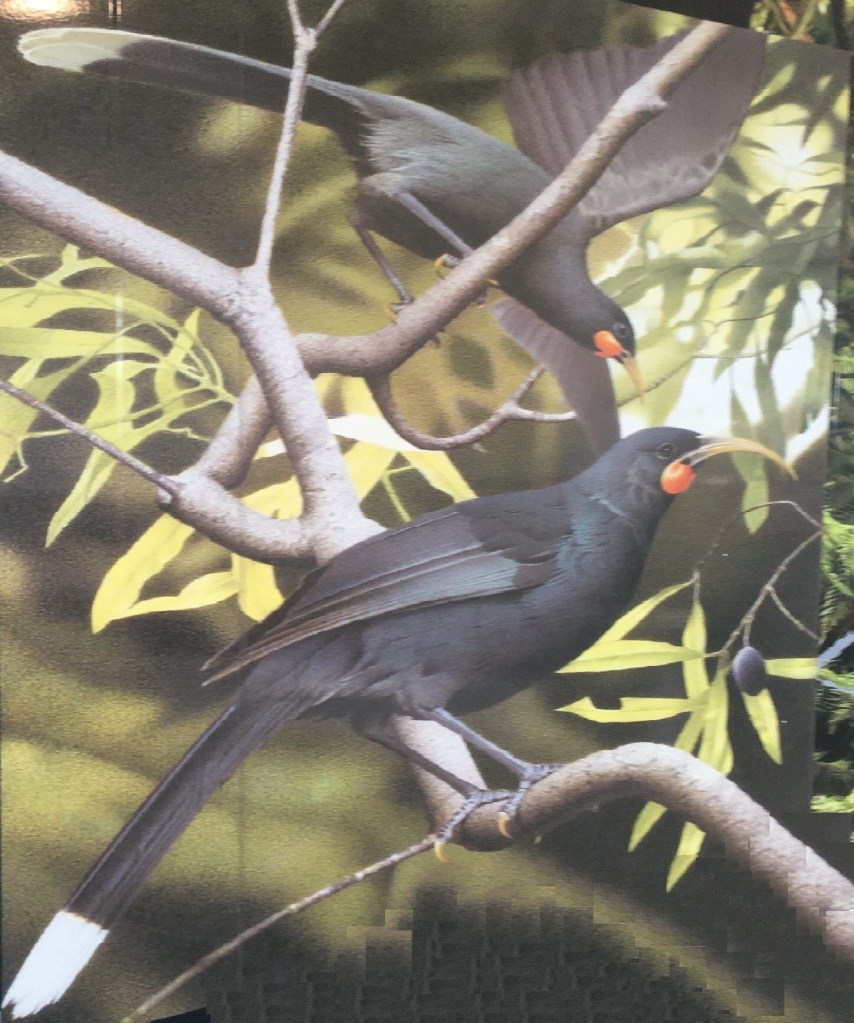
    The act of ‘putting a feather in a hat’ lead to the demise of the Huia. Their tail feathers had a white band at the end. The Prince of York returned from New Zealand with a Huia feather in his hat in 1901 and the resulting fashion sensation in Europe resulted in the Huia being hunted to extinction by 1907.

    Home.

    Share this:

    • Click to share on X (Opens in new window) X
    • Click to share on Facebook (Opens in new window) Facebook
    Like Loading…

Proudly Powered by WordPress.com

  • Home
  • How to
  • About
    • Getting There
  • Our 2023 AdventureHeader for drop-down of travel locations
    • South Island
      • Christchurch Area / Banks Peninsula
        • Historic Christchurch
        • Quake City
        • City in Rebirth
        • City of Art
        • Akaroa
        • Pohatu Penguins
      • The West Coast
        • Pancake Rocks – Punakaiki
        • Paparoa Wildlife Trust Kiwi Release
        • To Haast and Beyond
        • On to Kingston
      • Milford Sound
      • Otago
        • Queenstown
        • Through Central Otago
        • Royal Albatross Centre
        • Dunedin
        • Orokonui Ecosanctuary
        • Oamaru
      • Back to Canterbury
        • Off to Aoraki / Mt Cook
        • The Clay Cliffs
        • Aoraki / Mt Cook
        • Driving in the Rain
        • Getting to Kaikoura
        • Kaikoura
        • On the Road Again
      • Omaka Aviation Heritage Centre
    • North Island
      • Wellington to Matamata
        • Wellington
        • On to Lake Taupo
        • Huka Falls
        • Te Puia
        • Mt Manganui to Matamata
      • Hobbiton
        • On to Matakohe
      • The Kauri Forest
        • The Kauri Museum
        • The Kauri Forest Walk
        • Omapere
      • The Bay of Islands
        • Waitangi Treaty Grounds
        • Russell
      • To Whangarei and Beyond
        • Hundertwasser Art Centre
      • Auckland
        • Auckland Sky Tower
        • Auckland War Memorial Museum
        • Auckland Viaduct Harbour
      • Homeward Bound
  • Natural History
  • Contact
 

Loading Comments...
 

    • Subscribe Subscribed
      • Grampafacts
      • Already have a WordPress.com account? Log in now.
      • Grampafacts
      • Subscribe Subscribed
      • Sign up
      • Log in
      • Copy shortlink
      • Report this content
      • View post in Reader
      • Manage subscriptions
      • Collapse this bar
    %d