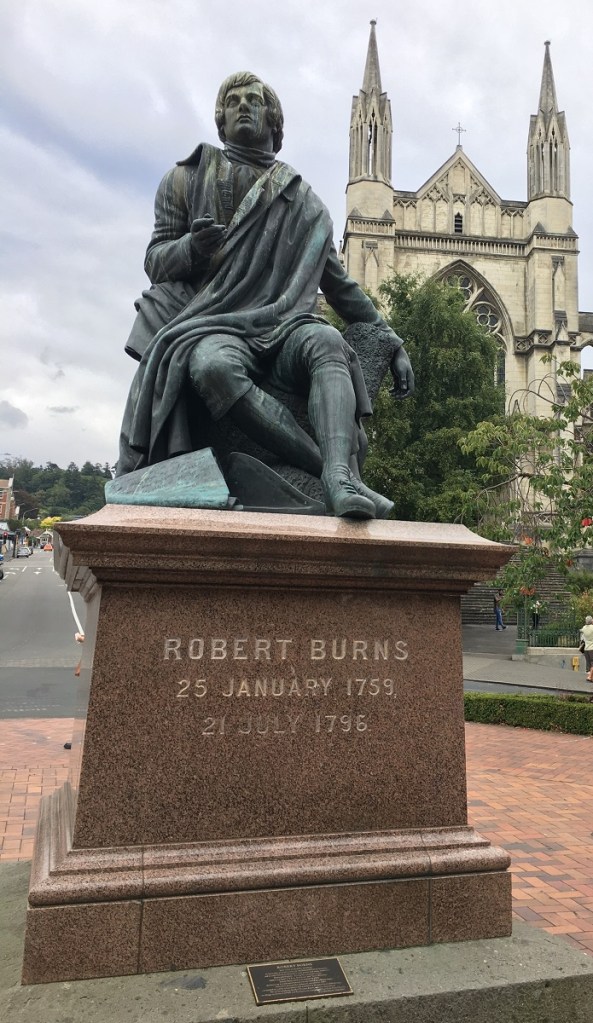
Dunedin was established in 1848 by the Lay Association of the Free Church of Scotland and the Scottish culture is reflected in architecture, place names, and the general feel of the place. The statue below is the principle feature of “The Octagon”, Dunedin’s central 8-sided plaza. The plaza’s surrounding octagonal road is within an outer concentric octagonal road (Moray Place). The Octagon, with it’s two concentric roads, is the defining feature of downtown Dunedin. Many of the city’s prominent buildings are within or adjacent to The Octagon, and have been since the earliest days.
With the goldrushes of the 1860’s, Dunedin quickly grew to be the largest and wealthiest city in New Zealand.

The first two boatloads of immigrants arrived in 1848, and Dunedin’s development from that point was remarkably rapid. For example this building, St Paul’s Cathedral, opened in 1863.
Dunedin’s European population growth was:
Oct. 1849 – 444
Dec 1859 – 2,262
Dec 1860 – 12,691
Dec 1861 – 30,269
The Otago gold rush, starting in 1861 and being nearby, sustained Dunedin in the early ’60’s. Discovery of gold on the west coast in 1864 caused a rush west, and the population fell by half. As the first major south island port, Dunedin continued to thrive and grow.

This building opened as the Captain Cook Hotel in 1860.
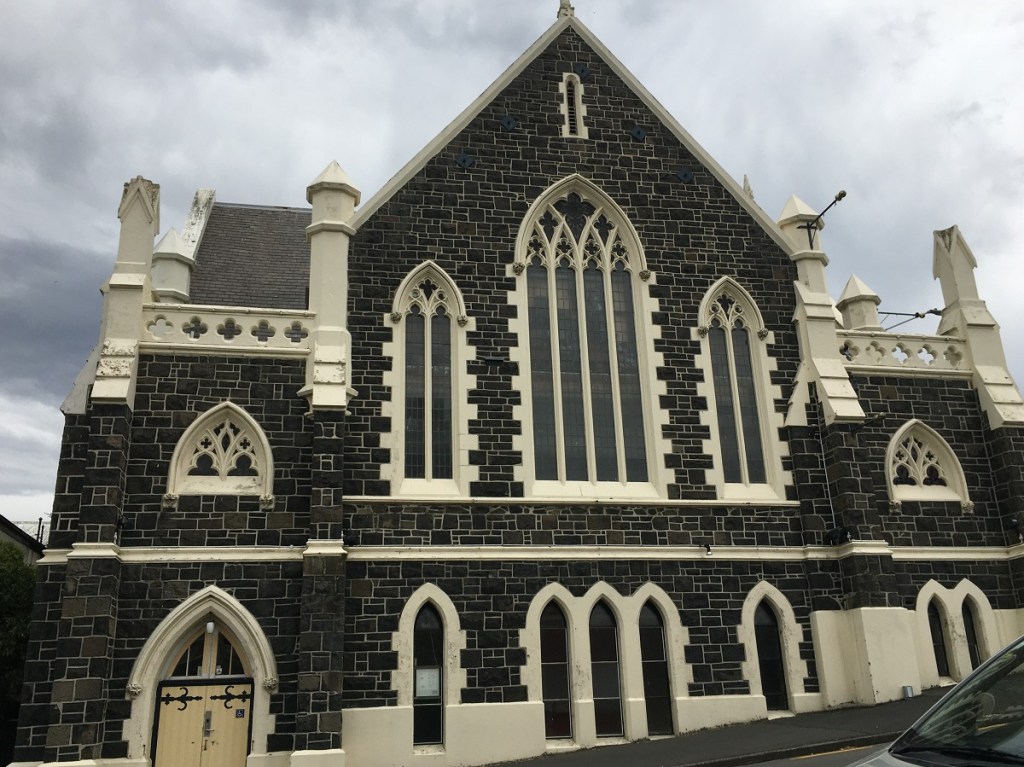
Currently in use as a theatre, this building opened as the Trinity Wesleyan Methodist Church in 1869. It’s on the outside of Moray Place on the uphill side of The Octagon.
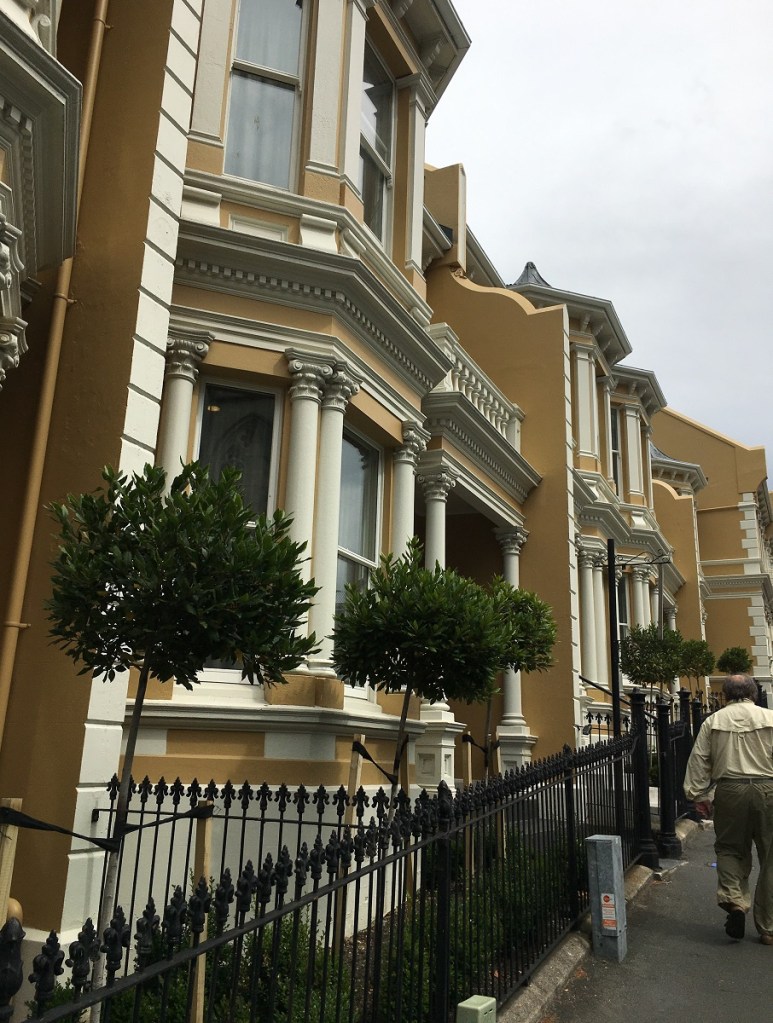
I can’t verify the age of these buildings, but I can verify that they are available on line as luxury suites in the heart of Dunedin. When you reach the top of this very steep block, the Trinity Wesleyan Methodist Church will be across the street on the left.
One of the difficulties of developing Dunedin is that the city plans were prepared in the UK by individuals without personal knowledge of the lay of the land. Because the plans had been sent from Britain, the builders decided that they must follow those designs.
The design placed The Octagon in a very hilly location. Substantial earthworks were required to make The Octagon even this usable.
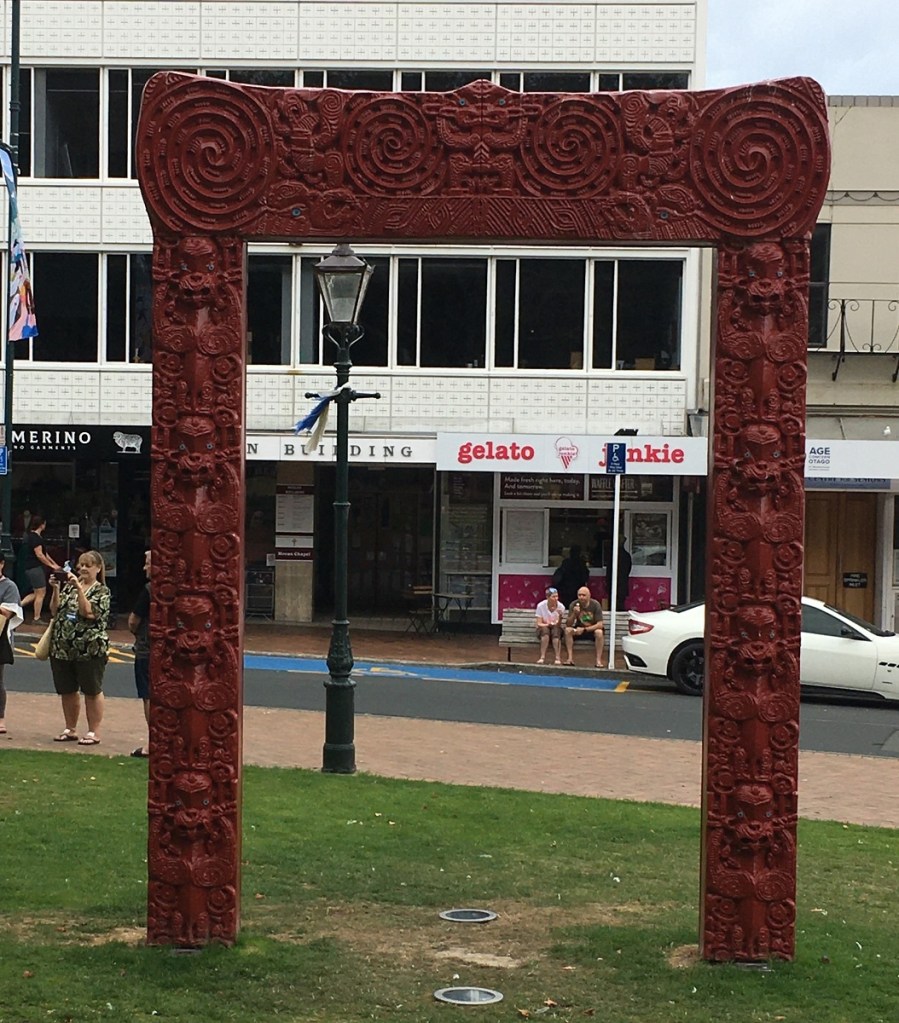
This Māori arch stands on the lower lawn of The Octagon. We resisted the temptation to become gelato junkies!
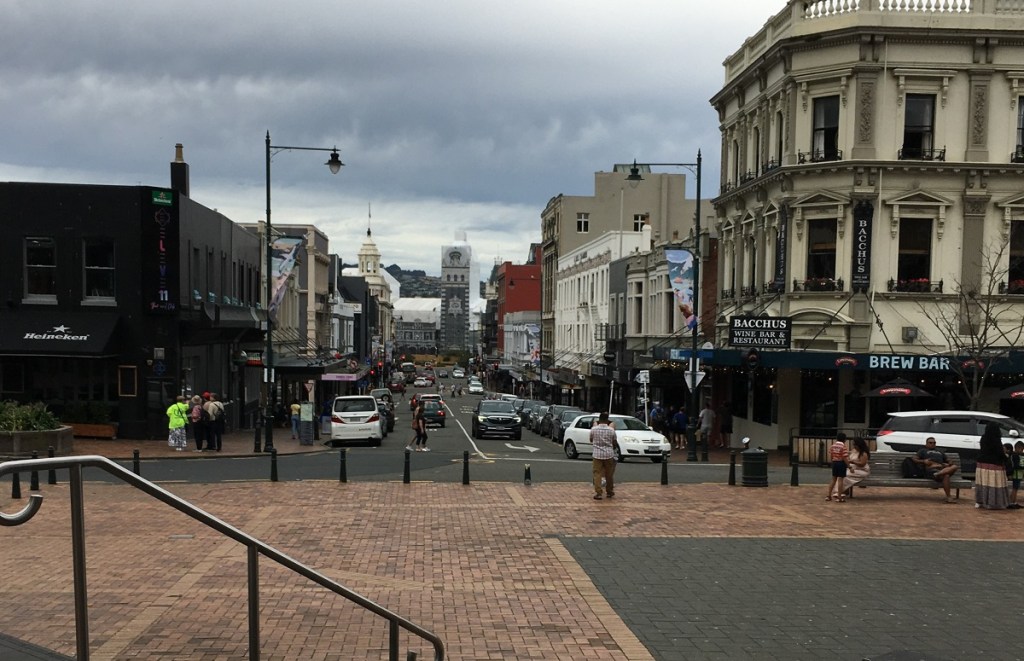
This view from The Octagon is looking downhill toward the train station, which was under renovation when we visited and is therefore shrouded in white tarps.
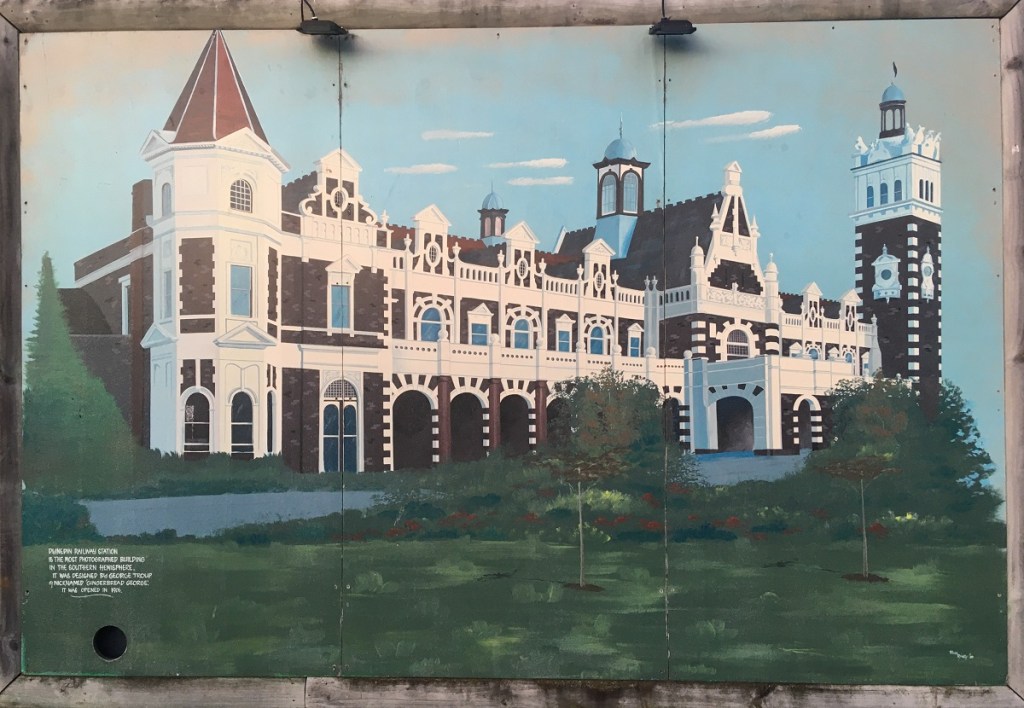
The campground we stayed at had paintings of important Dunedin features, including this historic painting of the Dunedin Train Station.
While Dunedin was connected to Christchurch by rail in 1878, this station was a later addition. It opened in 1906 and is reputed to be the most photographed building in Dunedin.
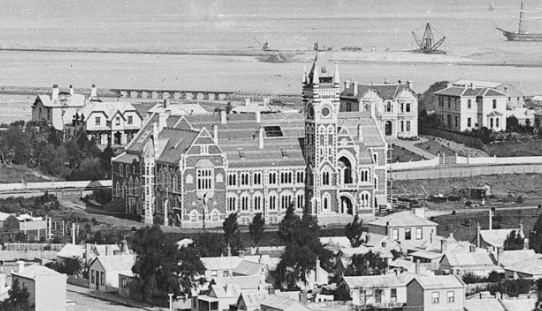
The University of Otago, which opened in Dunedin in 1869, was the first university in New Zealand.
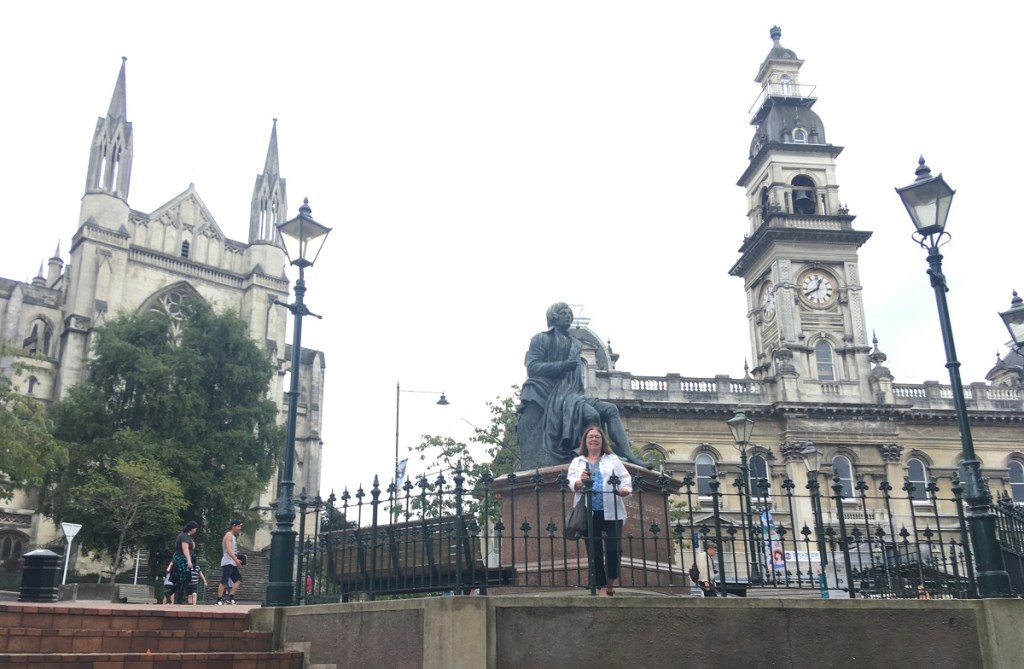
Standing in front of the Robbie Burns statue, Lynne has St. Paul’s Cathedral (1863) to our left of her, and the Dunedin Town Hall (1880) to our right. Both are within The Octagon. The Robbie Burns statue was unveiled in 1887 on the eve of a great Exhibition.
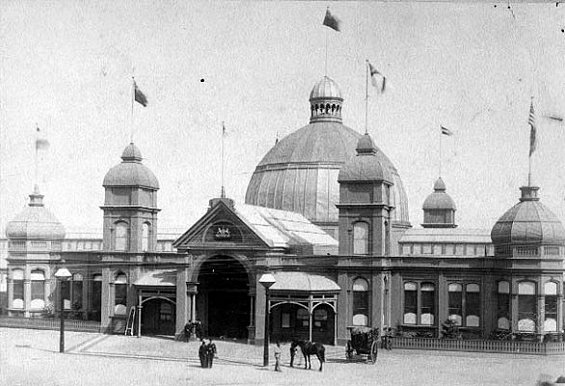
The New Zealand and South Seas Exhibition was held on a 12.5 acre site on the Dunedin waterfront between November 26th 1889 and April 19th 1890. This was the main entrance.

While not a World’s Fair, this was a major exposition. The 20 countries in addition to NZ represented included the UK and 5 other major European countries, USA, Canada, Japan and Australia. In the 125 days of the fair the recorded attendance was 625,248, an impressive number given the difficulty of getting to NZ in 1889. This photo collage is the centrefold of The New Zealand Graphic and Ladies Journal, May 31, 1890 edition.
The Exposition was dedicated to selling New Zealand to the world and most of the current day cities and regions were separately represented. While this was a major event for Dunedin and caused a lot of local optimism, 1890 roughly coincided with the rise of Auckland and Wellington as business and port cities. Dunedin’s reign as the largest and most prosperous city in New Zealand spanned roughly the years 1860 – 1890.
Notwithstanding this, a couple of additions to The Octagon in the early 20th century are worthy of comment.

First opened as the 2,000-seat Empire Theatre in 1916. It was re-modeled in 1928 to a Moorish Atmospheric style, with starred ceiling, minarets, a Taj Mahal-like curtain surround and a Christie theatre organ. A new Art Deco style lower lobby was built in the late-1930’s. The theatre played to sold out houses on occasion throughout it’s life. It closed in 1993 and re-opened as a Rialto 3-plex in 1998.
Some of the early ornate lower lobby features have been refurbished or remain on display.
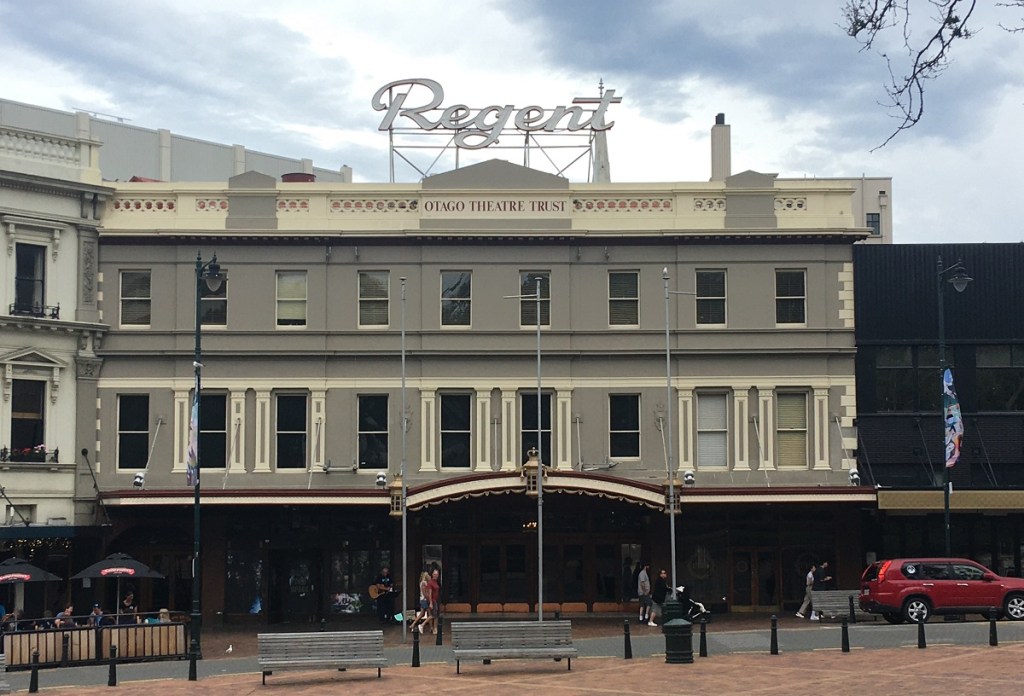
The Regent Theatre opened in 1928 with 1,728 seats, less than 200 m from the 2,000-seat Rialto. Dunedinites must have been quite the motion picture buffs!
The design was after the Paris Opera, (Palais Garnier) completed in 1875 and the interior is still elaborately decorated in the baroque style characteristic of the time. It currently seats 1,617 and is Dunedin’s finest performing arts venue, supporting an array of performing arts, cinema, and community events.
Today, Dunedin is a university town. It has a population of about 126,000 of which roughly 20% are students. The University of Otago is one of the South Islands largest employers.
Dunedin Street Art

The street art is rather quirky. The first four shots present art on the buildings in the Octagon.
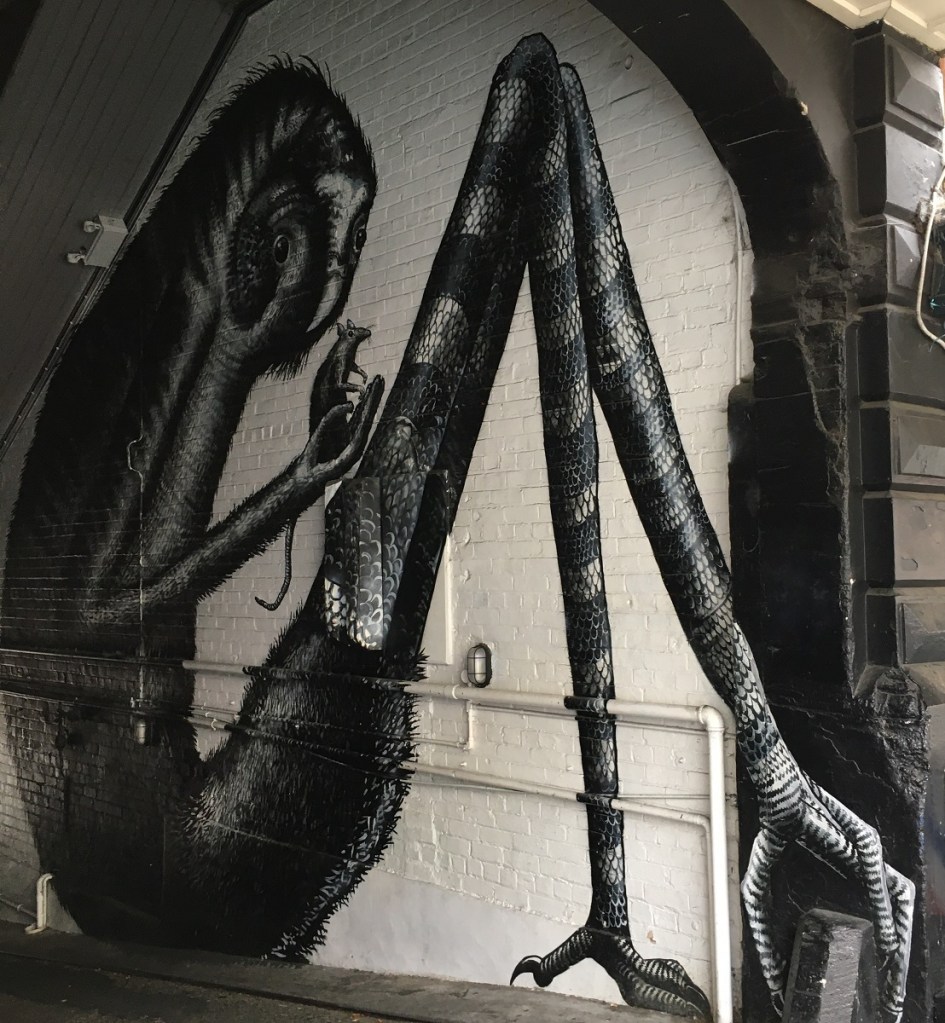
This fellow occupies the entranceway to a parkade.

This fellow adds a distinctly Māori flavour to the street art.

This one presents a bit of a brighter picture. If you find yourself walking around the Octagon, take in a meal at “the kitchen table café and bake”. While we didn’t eat there, it gets rave reviews from vegans, vegetarians and meat eaters alike!
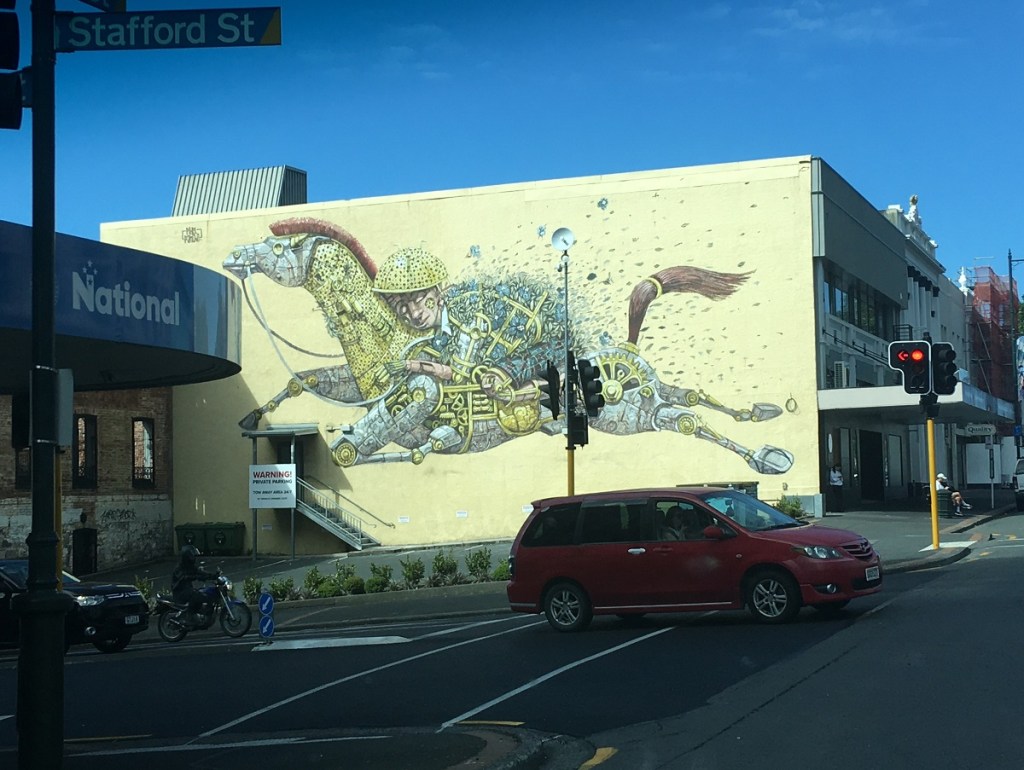
Now we’re away from the Octagon. These are random locations about town.
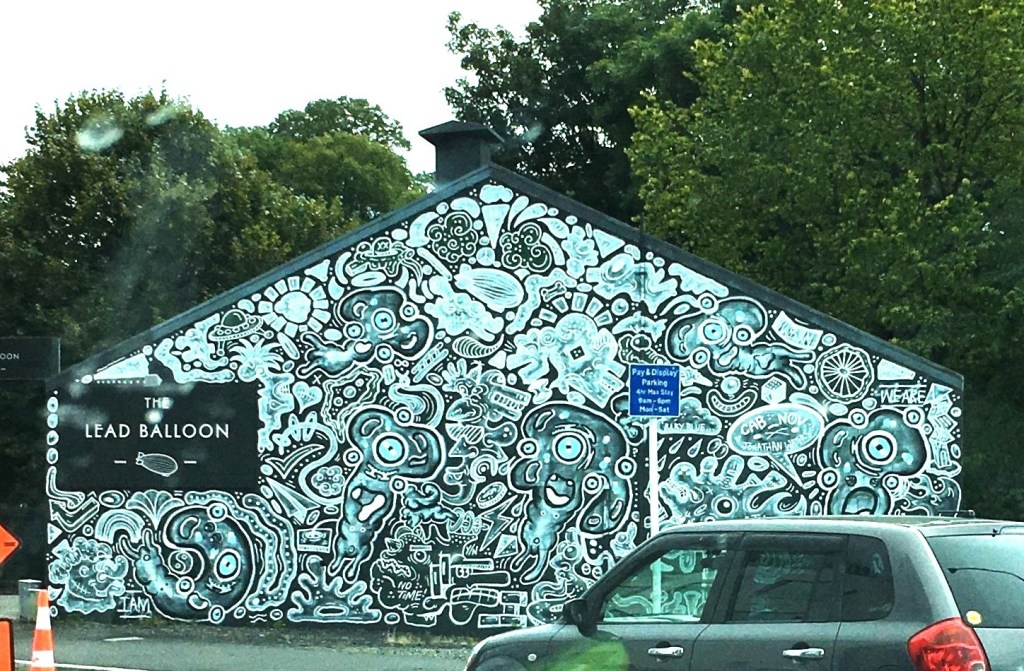
The Lead Balloon is a café near the campus of the University of Otago, again very highly ranked. Pretty distinctive street art as well!
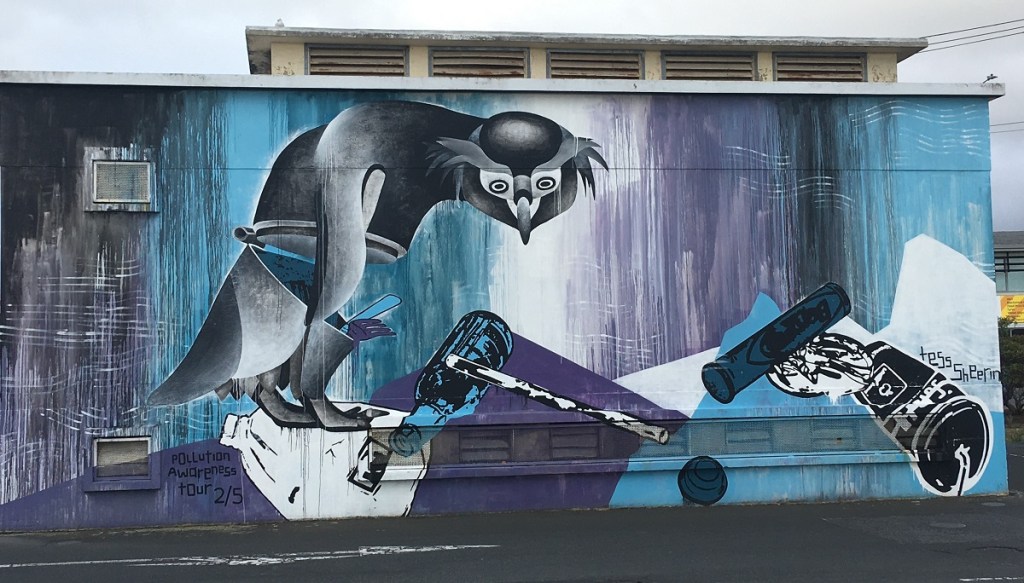
This final one is on a building at the side of the Countdown grocery store parking lot near our campground.
Dunedin street art reflects a different style compared to what we saw in Christchurch.
 Grampafacts