Public art has played a big role in Christchurch.
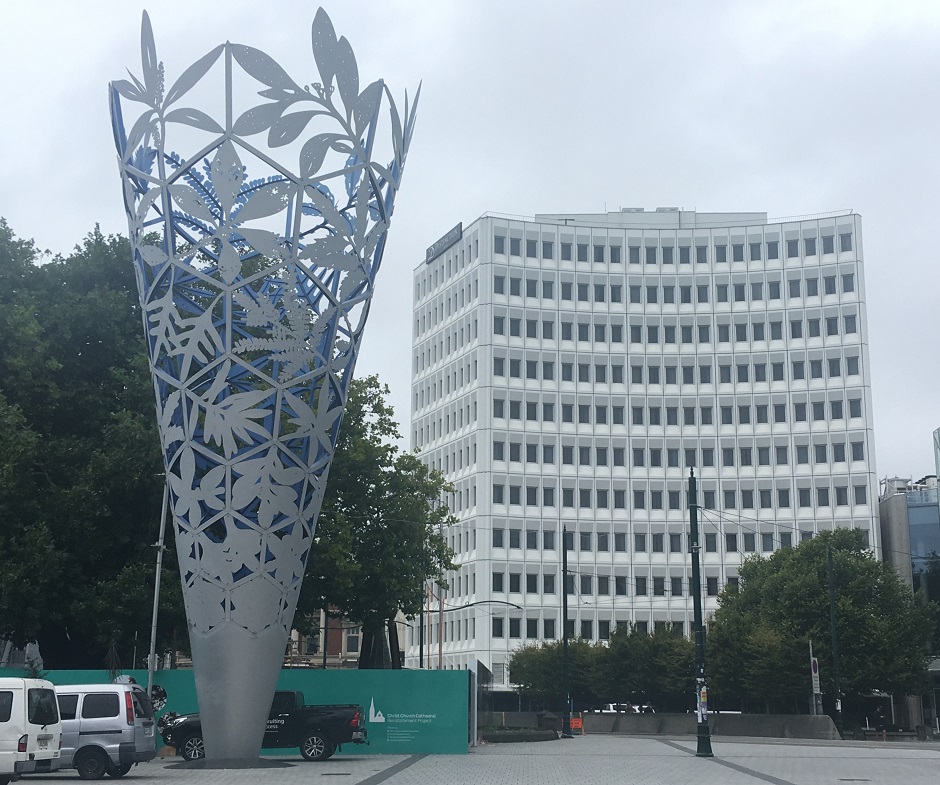
The Chalice stands in Cathedral Square. It was installed to celebrate the new millennium and the 150th Anniversary of the founding of Christchurch and Canterbury by the Canterbury Association.
It was created by sculptor Neil Dawson and the official lighting ceremony was held September 10, 2001.

Maori carvings like this one at City Hall reflect the Maori heritage of the area.

Stay is one of two identical works commissioned in 2016. The other stands on the grounds of the Art Centre. The works reflect a single moment in time and place in two contexts: a tree-lined river where during the earthquakes the trees were unscathed and the river never ceased to flow, and a historic building that, although damaged, survived the quakes.

And this is a shout-out to a New Zealand art form, their coffee culture. New Zealanders take their coffee very seriously. If you stop at a small supermarket in a country town and order a cup of coffee, they will grind the beans fresh, brew an espresso and make an Americano for you, complete with crema. If you want a cappuccino or latte that will be available too. Stop at a gas station for some petrol, they’ll brew it fresh for you there too. They take pride in it and they do it well, to a person!
Cafe Therapy: angel wings and all! The healing culture!

Flour Power by Regan Gentry was installed in 2008. This sheaf of wheat comprises 8 ½ steel power poles and 153 streetlamps. It reflects the transition of Canterbury from fields of crops to fields of houses and streetlamps.
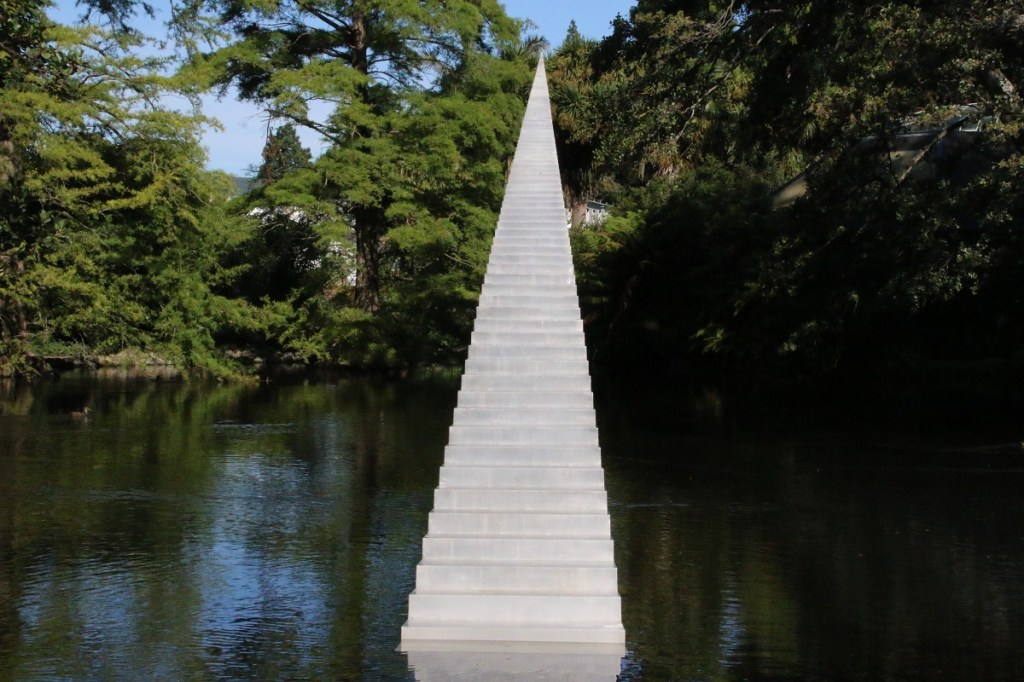
Diminish and Ascend by David McCracken was installed in Kiosk Lake in the Botanic Garden in 2018.
Christchurch’s own stairway to heaven!
Following the earthquakes, empty lots left the sides of buildings exposed, and there was a response in street art.
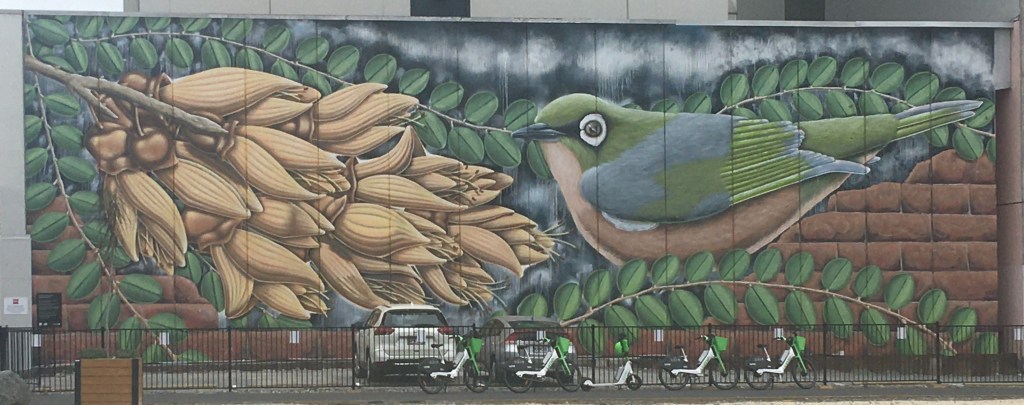
Much nicer than a bare wall next to a parking lot.
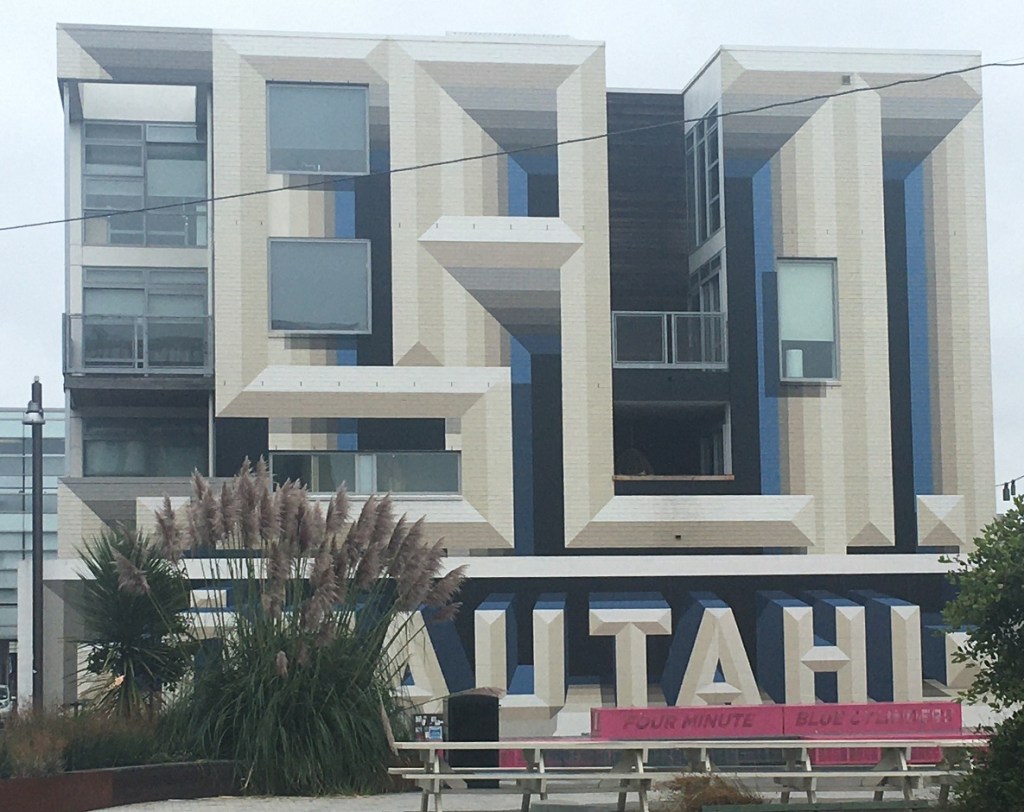
This very textured looking building is a flat brick wall with windows and balconies. All of the other features are painted onto the structure. I had to walk right up to the building and take this detail photo to convince myself. Note that the edges of the “structures” don’t match the edges of the bricks.


The image on the right celebrates John Britten, a New Zealand mechanical engineer. He created the Britten Motorcycle Company in 1992 to produce machines to his own design made of light materials and using engines that he had built himself. They were world-record-setting and made him famous around the world. Unfortunately, he died in 1995 after a brief illness with malignant melanoma. Only 10 of his motorcycles were ever made. They are all still in use, 3 in New Zealand and the other 7 around the world.
 Grampafacts